
The Library Media — World
Puerto Rico Governor Signs Law Establishing Income-Based Payment Plans for Water and Electricity Debts
By Maya Wilson, World Desk Lead
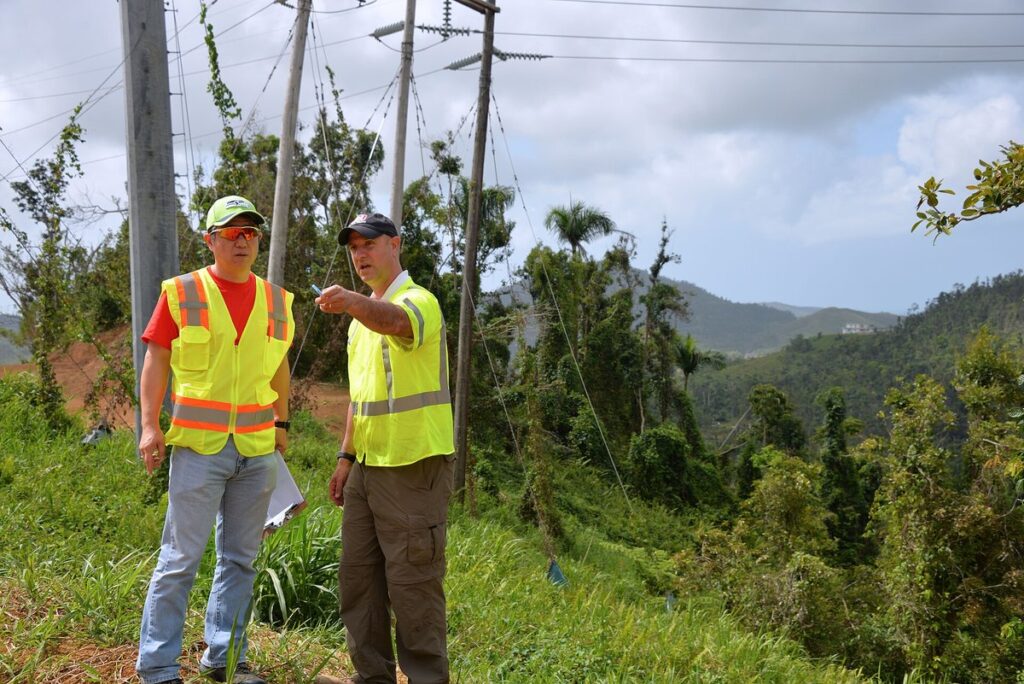
Photo: South Atlantic Division (SAD) USACE from Atlanta, GA / Wikimedia Commons (Public domain)
Puerto Rico Governor Jenniffer González has signed into law a measure establishing income-based payment arrangements for residential customers and small businesses with outstanding water and electricity bills, allowing them to maintain essential services while they comply with approved plans. The legislation, titled the Ley de Planes de Pagos para Garantizar la Continuidad de Servicios Esenciales (Payment Plans Act to Guarantee the Continuity of Essential Services), is intended to make repayment more manageable without cancelling the underlying debt, according to reporting by NotiCel on Thursday, November 19.
For residential customers, the initial payment under a plan must be between 5% and 20% of the outstanding debt. Monthly installments may not exceed 5% of household income. Interest is prohibited on debts below $5,000. Customers may document their income through a tax return, pay stubs or an employer certification. Service suspension is avoided while customers comply with the payment arrangements.
The law also establishes separate terms for small businesses. NotiCel defines the eligible category as non-residential customers on the General Service at Secondary Distribution Voltage rate with a connected load below 50 kilovolt-amperes. Their initial payment may not exceed 10% of the debt, and it is waived for customers who had no more than one late payment during the preceding 12 months. Repayment plans may run for up to 24 months, extending to 36 months when the debt exceeds $10,000. Interest is waived during the first year, and no late fees or service suspension may be imposed while the customer complies. Missing two consecutive installments results in the loss of the plan, although it may be restored once if the overdue payments are made.
The legislation also provides relief when quarterly fuel and energy-purchase factors increase by at least 3 cents per kilowatt-hour. Small businesses may pay the portion of their bill attributable to that increase in up to six equal monthly installments, without interest or late fees. The Energy Bureau has 90 days to evaluate an option for levelized billing based on average consumption over the preceding 12 months.
The provisions come amid higher electricity costs. NotiCel reported that the Energy Bureau approved a net increase of 5.2848 cents per kilowatt-hour for the October-December 2026 quarter. A business consuming 1,200 kilowatt-hours saw its bill increase from $371.82 to $435.24, a rise of 17.1%.
The law applies prospectively to applications submitted after it takes effect, 60 days after approval. It does not forgive principal owed and must be implemented without impairing the Fiscal Plan certified by the Financial Oversight and Management Board. Energy providers must submit reports every six months to the Energy Bureau and the Legislative Assembly. Customers who believe a payment plan violates the law may seek administrative review from the provider or the Department of Consumer Affairs, known as DACO, which must resolve the matter within 30 days.
The measure faced opposition from both major utility providers. The Puerto Rico Aqueduct and Sewer Authority (AAA) argued that it already offers payment plans it considers reasonable and flexible according to subscribers’ financial capacity. It objected to provisions limiting initial payments to 10% of debt and monthly installments to $100, warning that the restrictions could harm revenues. LUMA Energy also opposed the measure, saying it would have the effect of defunding essential components of the electric system.
The bill’s statement of motives describes water and electricity as basic necessities and criticizes LUMA for requiring customers to pay 50% of their debt to qualify for a payment plan, a threshold it says many families cannot meet. NotiCel’s report did not provide a law number or a separate date on which González signed the measure.
Maya Wilson
World Desk Lead, The Library Media
From The Library — the estate of our family.
Follow Us


