
The Library Media — World
Puerto Rico Governor Signs Bill Recognizing Puerto Rican Sign Language
By Maya Wilson
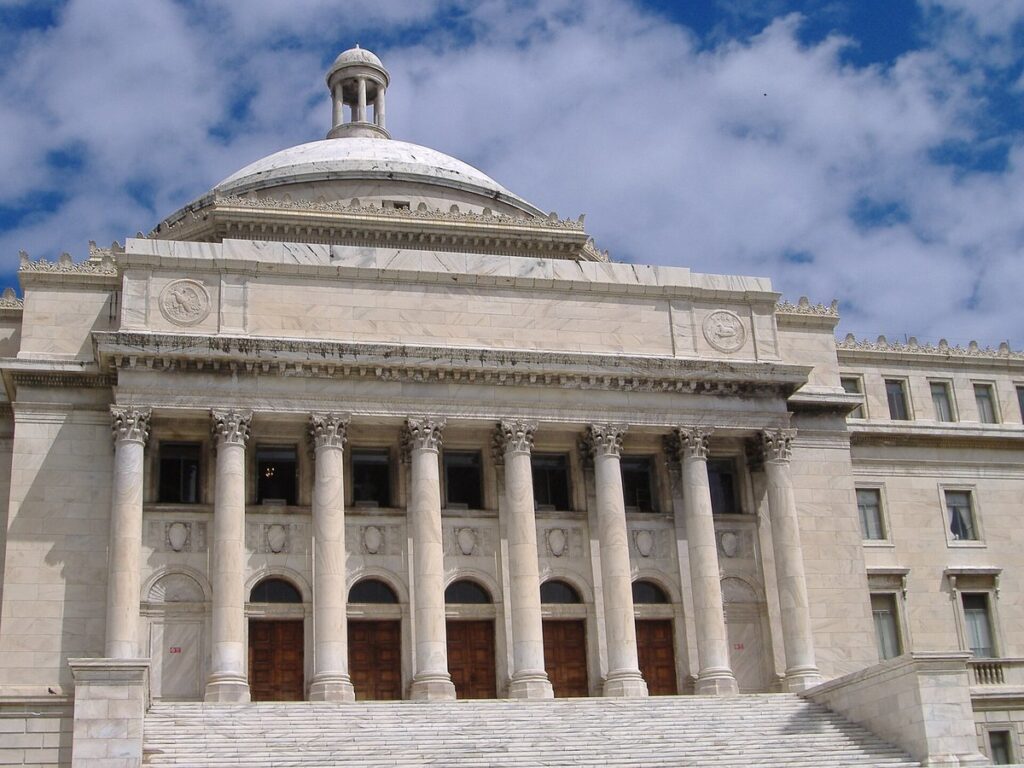
Photo: User:Mtmelendez / Wikimedia Commons (CC BY-SA 3.0)
Puerto Rico’s governor has signed legislation officially recognizing Puerto Rican Sign Language, establishing the language’s status as part of the island’s cultural and linguistic heritage and requiring a census of the deaf community to inform public policy.
The measure, Senate Bill 1463, was authored by Senator Ángel Toledo and takes effect immediately. The signing followed two previous vetoes, according to NotiCel, in an article by Diego Nieves Berríos published November 20, 2026. The report refers to the governor only as “la gobernadora” and does not identify her by name.
The legislation recognizes Puerto Rican Sign Language, known by its Spanish initials LSPR, as the natural, cultural and linguistically legitimate language of Puerto Rico’s deaf community. It also establishes government policy to guarantee inclusion, diversity and respect for the linguistic rights of all people, and recognises the language’s cultural and social value as part of the island’s heritage.
A central distinction in the measure is that LSPR and Spanish are separate languages, each with its own grammar, vocabulary and rules. Deaf people who use LSPR and also master Spanish are recognised under the law as bilingual. The measure therefore treats sign language not as a variation of spoken Spanish, but as a language in its own right.
The law also gives an expanded role to the Deaf Community Liaison Office, or Oficina Enlace de la Comunidad Sorda, which is attached to the Ombudsman for Persons with Disabilities, known in Spanish as the Defensoría de las Personas con Impedimentos. The office is empowered to conduct studies and consultations and make recommendations aimed at promoting, preserving and strengthening LSPR, including its regional variants.
One such variant is the sign language used in Orocovis, known as LSOR. NotiCel identifies it as documented by linguist and interpreter Marina Martínez Cora. The law includes regional variants within the liaison office’s responsibilities.
The legislation further requires the Ombudsman for Persons with Disabilities and the Institute of Statistics, or Instituto de Estadísticas, to carry out a census of the deaf community. The measure acknowledges that precise official data on this population are currently unavailable, a gap it identifies as an obstacle to developing effective public policy.
The census is intended to gather information about the use of LSPR and its variants, as well as the community’s needs in accessing public, educational and health services and participating in social life. The information is to be used only for statistical, planning and public-policy purposes.
The law’s provisions address a history of communication barriers during emergencies. NotiCel reported that Yolanda Rodríguez Fraticelli, president of Sordos Unidos de Puerto Rico, described how, during hurricanes Irma and María, many deaf people learned of the danger only when the wind was already tearing the roofs from their homes. Rodríguez Fraticelli shared that account with the publication in August; the article does not specify the year.
The bill’s statement of motives also cited the experience during Hurricane María, when media outlets used American Sign Language interpreters, even though American Sign Language is not the language of Puerto Rico’s deaf community. In Orocovis, the statement noted, the sign used for “huracán” is the same sign local deaf people use for “transformador.”
NotiCel does not report that the law requires sign-language interpreters in emergency communications or establishes an education mandate.
Several details about the law’s passage and provisions are not specified in the report. NotiCel does not provide an enacted law number or formal name, or the exact date on which the governor signed the bill. It does not explain who issued the two earlier vetoes, when they occurred, why the bill was vetoed or what changed before the eventual signing.
The report includes no reaction to the signing from members of the deaf community, legislators or the governor. It also gives no deadline, methodology or budget for the census.
Maya Wilson
World Desk Lead, The Library Media
From The Library — the estate of our family.
Follow Us


