
The Library Media — World
Marcos Signs Law Putting K-12 Private School Vouchers on a Permanent Footing
By Maya Wilson
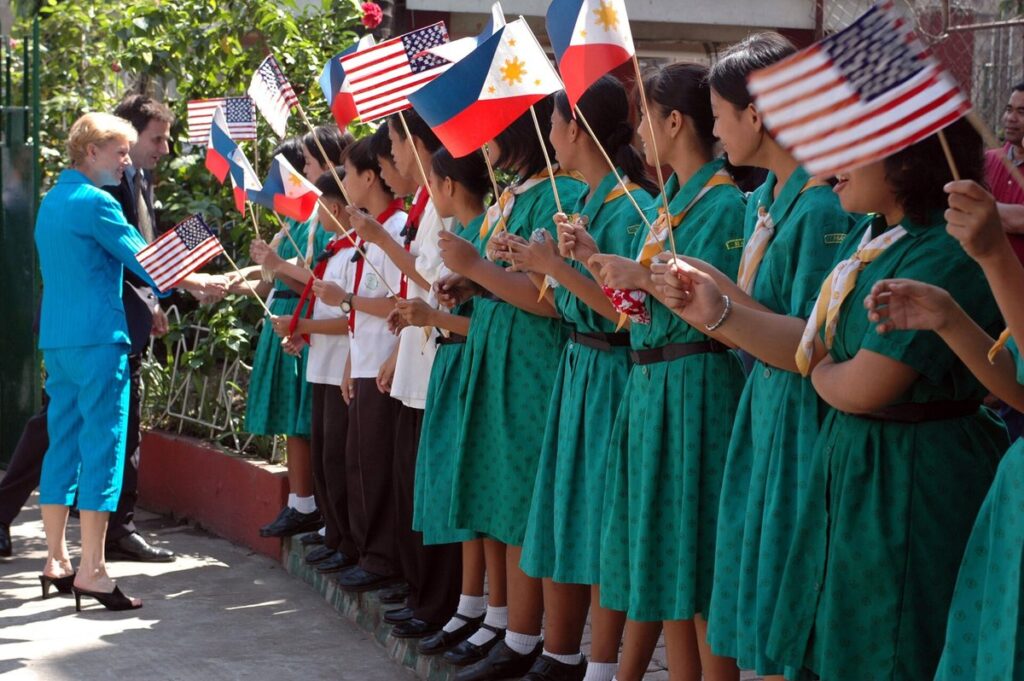
Photo: U.S. Navy photo by Mass Communication Specialist Seaman Shannon K. Cassidy / Wikimedia Commons (Public domain)
Philippine President Ferdinand Marcos Jr. has signed a law institutionalising the government’s education voucher program, establishing permanent assistance for eligible Kindergarten to Grade 12 students who attend participating private schools.
Marcos signed Republic Act No. 12327, the Basic Education Voucher Assistance Act, on November 12. The law’s text was released on Friday, November 20, according to the Inquirer.
The measure provides vouchers toward school fees at participating private schools. Its stated aims are to ease congestion in public schools, address the longstanding shortage of classrooms at the basic education level and expand access to private education. The assistance covers basic education only.
Eligibility is limited to students from middle-income households and below. The law establishes a priority order for beneficiaries, beginning with students who attended public schools designated by the Department of Education (DepEd) as congested.
Under the law, congestion is defined as a situation in which enrolment exceeds classroom capacity under DepEd’s student-to-classroom ratio standards. It also includes schools that have resorted to multiple shifts or alternative delivery modes.
The second priority group consists of students living in areas without a nearby public school. For senior high school students, the provision also covers areas where public schools do not offer the subjects or electives aligned with students’ chosen pathways.
Private schools participating in the program will be subject to regular DepEd assessments to remain eligible.
DepEd welcomed the signing and said it hopes to begin rolling out the program in school year 2027-2028, subject to available funding. The department’s statement said: “DepEd remains steadfast in working hand-in-hand with the private sector to bring accessible quality education to every Filipino child.”
The law’s implementing rules and regulations are expected within 60 days.
The rollout timeline therefore remains conditional on funding availability, while the implementing rules are still to be issued. The Inquirer report did not specify how much money has been allocated to the voucher program. It also did not report the location where Marcos signed the law beyond identifying Manila in its publication dateline.
Maya Wilson
World Desk Lead, The Library Media
From The Library — the estate of our family.
Follow Us


