
The Library Media — World Desk
India’s Supreme Court Says Detention Clock Starts When Liberty Is Curtailed
By Maya Wilson, World Desk Lead
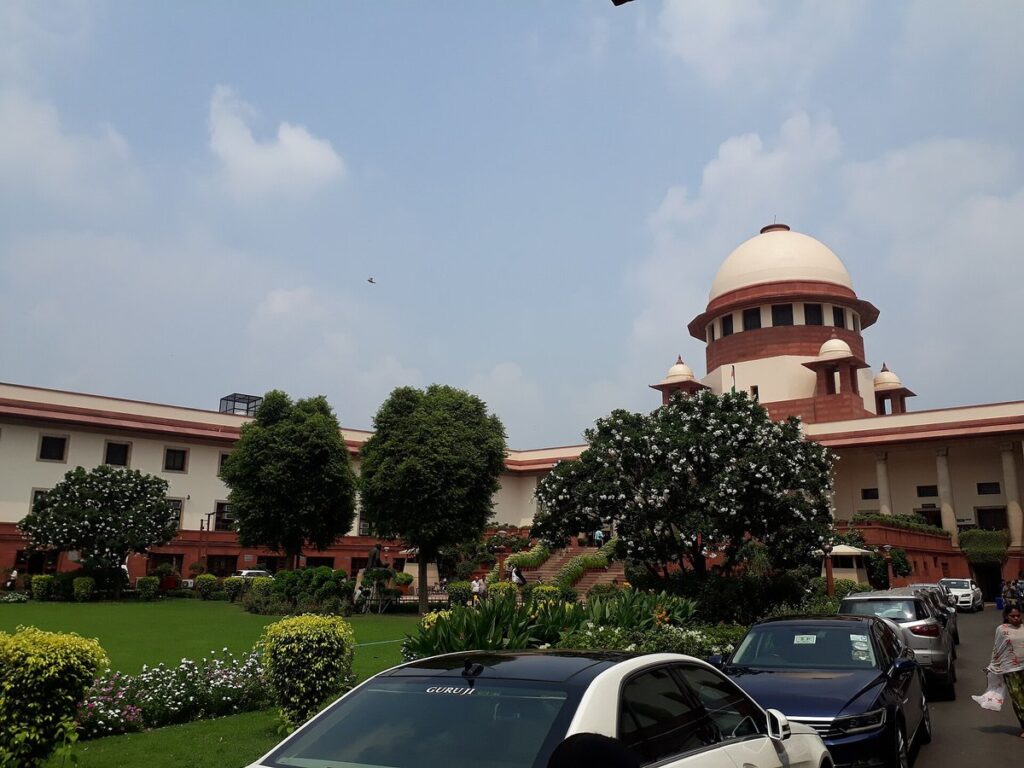
Photo: Pinakpani / Wikimedia Commons (CC BY-SA 4.0)
India’s Supreme Court has clarified that the constitutional 24-hour limit on holding a detained person before producing them before a magistrate begins when their liberty is effectively curtailed, not when authorities formally record an arrest. The ruling, delivered on Thursday, November 5, 2026, has returned to public attention this week following a reputable legal explainer.
In Sri Sujit Das & Ors. v. Union of India, 2026 INSC 1195, a two-judge bench comprising Justice Ujjal Bhuyan, who authored the judgment, and Justice Atul S. Chandurkar, set aside a Tripura High Court order refusing bail. The Supreme Court held that investigative agencies cannot delay the start of the constitutional clock by treating a person as detained during searches or questioning while recording the formal arrest later.
Article 22(2) of India’s Constitution requires a detained person to be produced before a magistrate within 24 hours. The judgment said that period runs from the moment liberty is actually curtailed, including when a person is placed under an agency’s control. It rejected an artificial distinction between detention and arrest, stating: “There is no such thing called temporary disruption of liberty” and “the Constitution does not recognise any detention dehors arrest”.
The court said the only period that may be excluded from the 24 hours is the necessary time taken to travel to the magistrate’s court. Searches, seizures, questioning, statements and formalities under the Narcotic Drugs and Psychotropic Substances Act cannot be used to suspend or extend the deadline. Investigative procedure, the judgment made clear, does not create a buffer zone outside the constitutional safeguard.
The ruling also identified an independent limit under Section 58 of the Bharatiya Nagarik Suraksha Sanhita (BNSS), 2023. Detention must remain reasonable even when it falls within the constitutional 24-hour period. A magistrate may refuse remand if the period of detention was unreasonable, even where the deadline has not expired.
Magistrates must record the actual date and time of detention at every production and verify compliance. Where the constitutional requirement has been breached, the person must be released immediately. Such release does not amount to acquittal, and prosecution proceedings may continue. The judgment expressly disapproved contrary lines of authority from the Orissa, Madras and Kerala High Courts.
The case arose from a Customs preventive team’s interception in Agartala, Tripura, on September 29, 2025. At about 2:00 p.m., officers intercepted Sujit Das, Suman Das and Rupak Sarkar; a fourth accused, Raju Das, was also named. The team seized 60.79 kg of methamphetamine (Yaba) tablets, and the search was complete by 5:00 p.m.
Formal arrests were recorded only at 11:00/11:15 a.m. on September 30, with an unexplained gap of about 18 hours. The men were produced before a magistrate at 4:45 p.m. that day, 26 hours 45 minutes after detention and 2 hours 45 minutes beyond the constitutional deadline.
The Supreme Court allowed the appeals, set aside the High Court’s order and directed that the appellants be produced before the Special Court within seven days and released on bail. The prosecution continues.
The judgment was circulated to state and union-territory police chiefs, High Court Registrars General and State Judicial Academy directors. It also stressed that remand requires judicial scrutiny: “Remand is never a mechanical exercise.”
No reactions from police, government or the legal community have been reported.
Maya Wilson
World Desk Lead, The Library Media
From The Library — the estate of our family.
Follow Us


