
The Library Media — World Desk
France Seeks Interpol Red Notices for Two Cambodian Suspects in Lim Kimya Killing
By Maya Wilson, World Desk Lead
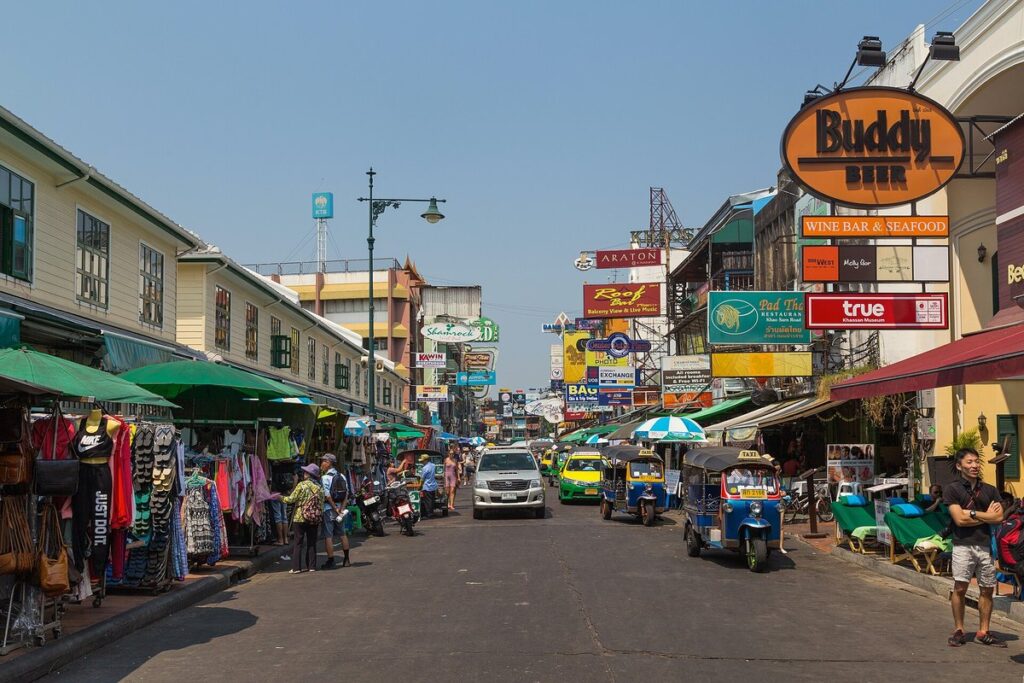
Photo: Marcin Konsek / Wikimedia Commons (CC BY-SA 4.0)
France has sought Interpol red notices for two Cambodian suspects in the killing of former Cambodian opposition lawmaker Lim Kimya, CamboJA News reported, days after French President Emmanuel Macron raised the case directly with Prime Minister Hun Manet during a visit to Phnom Penh.
Macron addressed the killing at a joint press conference with Hun Manet on November 15, 2026, during his state visit for the 20th Francophonie Summit. He said: “We want an investigation to shed light on what happened and bring those responsible for Lim Kimya’s killing in Thailand to justice.”
The French request, as reported by CamboJA, is separate from red notices issued in January 2025 at Thailand’s request. Those earlier notices followed Bangkok Criminal Court arrest warrants. The two Cambodian suspects remain at large, and Cambodia has arrested neither man.
An Interpol red notice is a request to law enforcement worldwide to locate and provisionally arrest a person pending extradition, surrender or similar legal action. It is not an international arrest warrant. Member countries apply their own laws when deciding whether to arrest someone.
Human Rights Watch said on November 14, 2026: “Both suspects remain at large. Cambodia has not meaningfully investigated the allegations surrounding the two suspects.”
The suspects are Ly Ratanakrasmey and Pich Kimsrin. Thai police allege that Ly, a Cambodian national who was 43 years old as of January 2025, recruited the gunman for 60,000 baht. Investigators traced money transfers to the shooter, according to the Thai police account. Ly entered Thailand on January 6, 2025 and flew back to Cambodia on January 8, the day after the killing.
Ly was a former adviser to Hun Sen. The ruling Cambodian People’s Party said he had been dismissed in March 2024, about ten months before the murder. No court finding links Hun Sen to the killing.
Thai police allege that Pich, a Cambodian national who was 24 years old as of January 2025, travelled on the same cross-border bus as Lim Kimya, was captured on CCTV following him and his family in Bangkok, and communicated with the gunman several times, including in a call four hours before the shooting. Pich is the brother of Pich Sros, the politician whose petition began proceedings that led Cambodia’s Supreme Court to dissolve the Cambodia National Rescue Party in 2017.
Lim Kimya, 74, was elected to the National Assembly for the CNRP in 2013. He held dual Cambodian and French citizenship and was a former French civil servant. France’s Foreign Ministry said on January 9, 2025: “France condemns the murder of Lim Kimya, a French citizen and a member of the Cambodian opposition, who was killed in Thailand on January 7.”
He was shot three times on January 7, 2025, in Bangkok’s Bang Lamphu district, near Wat Bowonniwet and Khao San Road, minutes after arriving by bus from Cambodia with his wife. He died at the scene in front of her.
The gunman, Ekkalak Paenoi, a former Thai marine, fled to Cambodia and was arrested in Battambang on January 8, 2025. He was handed over to Thailand on January 11 and confessed. Bangkok Criminal Court found him guilty of premeditated murder on October 3, 2025, sentencing him to death, later commuted to life imprisonment because of his confession. The court ordered 1.79 million baht in compensation to the family. A second Thai defendant accused of driving the gunman toward the border was acquitted for insufficient evidence. The trial did not establish who ordered the shooting.
France’s involvement also follows a complaint filed there by Lim Kimya’s widow, Lim Ani, who was questioned by French judicial authorities in early 2025. Cambodia’s constitution bars extraditing Khmer citizens except under mutual agreement. Cambodian Interior Ministry spokesman Khieu Sopheak called the Thai warrants “useless” and said the constitution did not permit extradition of Cambodian nationals.
In January 2025, Hun Manet rejected suggestions that his government or his father had organised the murder. He cited Cambodia’s swift arrest and handover of the gunman and said Thai police had classified the motive as a “personal conflict.”
Maya Wilson
World Desk Lead, The Library Media
From The Library — the estate of our family.
Follow Us


