
The Library Media — World
European Troops Rehearse Possible Postwar Deployment to Ukraine in Polish Exercise
By Maya Wilson
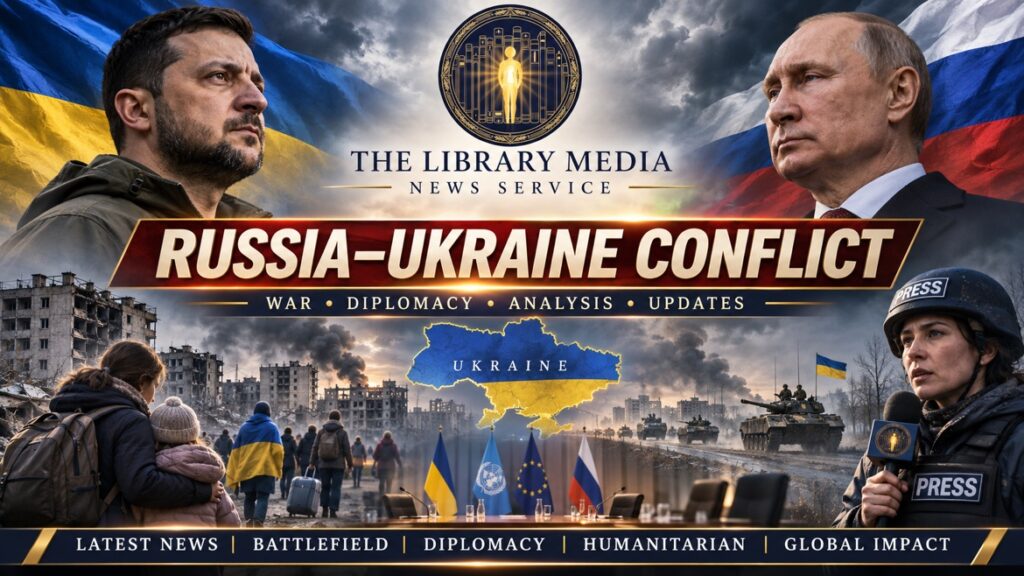
Image: The Library Media
Thousands of European troops are rehearsing in southeastern Poland for a possible deployment to Ukraine after the war, in the first exercise testing the coalition’s ability to put such a force on the ground once fighting ends. The two-week exercise, called Koalicja, began on November 9 at the Nowa Deba training ground and follows 12 months of planning by the Multinational Force-Ukraine, the Associated Press reported on Friday.
The force is a non-NATO initiative of the Coalition of the Willing, a political group of 37 nations supporting Ukraine, led by France and the United Kingdom. The original proposal was to provide Ukraine with security guarantees similar to NATO’s Article 5. Without a NATO commitment, France and the UK proceeded with a separate European plan.
Around 2,800 personnel from Belgium, Estonia, France, Germany, Lithuania, the Netherlands, Spain, Sweden and the UK are taking part. Poland is providing logistical support, while Turkey is participating from Istanbul, bringing the total number of countries involved to 11. French President Emmanuel Macron said 1,100 of the personnel were French and described the exercise as involving “terrestrial, air but also maritime operations.”
Troops arrived by sea, air and land before moving by rail and road. The exercise tests transport arrangements, joint command and control, fighter and tanker flights, surveillance drones, anti-drone defences and trench warfare. Brigadier Campbell Close, the British deputy commander for operations of the French Army’s 1st Division, which runs the land component, described it as “a deployment exercise” and said, “We are a defensive force.” He also praised Poland’s handling of the logistics.
MNF-U commander Lt. Gen. Tom Bateman said, as reported by AP, that if deployed after a ceasefire the force would help rebuild Ukraine’s armed forces, provide reassurance needed to reopen the country’s skies and help clear mines in the Black Sea. It would not undertake peacekeeping or peace-monitoring duties. Ed Arnold of the London-based RUSI think tank said that even a force with a purely defensive role would need to be a “combat force for their own force protection.”
The exercise is taking place as diplomatic discussions continue over Ukraine’s postwar security. In Berlin on Thursday, Ukrainian leaders and representatives of nearly 40 delegations met to discuss security arrangements. German Chancellor Friedrich Merz said the coalition was “ready to contribute with the United States of America to securing a peace.”
US envoys Jared Kushner and Steve Witkoff attended the Berlin discussions. Kushner said on Thursday that he believed Russia was comfortable with NATO-like security guarantees for Ukraine after the war. Moscow’s stated position differs: Russian Deputy Foreign Minister Sergei Ryabkov has called any quasi-membership formula for Kyiv unacceptable. AP also reported that President Donald Trump held trilateral talks on Thursday with Presidents Vladimir Putin and Xi Jinping in China before calling into the Berlin discussions, according to Kushner.
Russian President Putin said last year that any foreign troops inside Ukraine would be considered “legitimate targets.” Polish Defence Minister Władysław Kosiniak-Kamysz said he believed Friday’s airspace violation was another Russian provocation timed to coincide with the exercise.
The exercise demonstrates preparations for a possible multinational deployment, but no ceasefire agreement has been reached. The central questions remain what form Ukraine’s security guarantees will take, and whether Moscow and Kyiv would accept them.
Maya Wilson
World Desk Lead, The Library Media
From The Library — the estate of our family.
Follow Us


