
The Library Media — World
Bulgaria’s Parliament Appoints 11 to Supreme Judicial Council, Ending Years of Overstay
By Maya Wilson
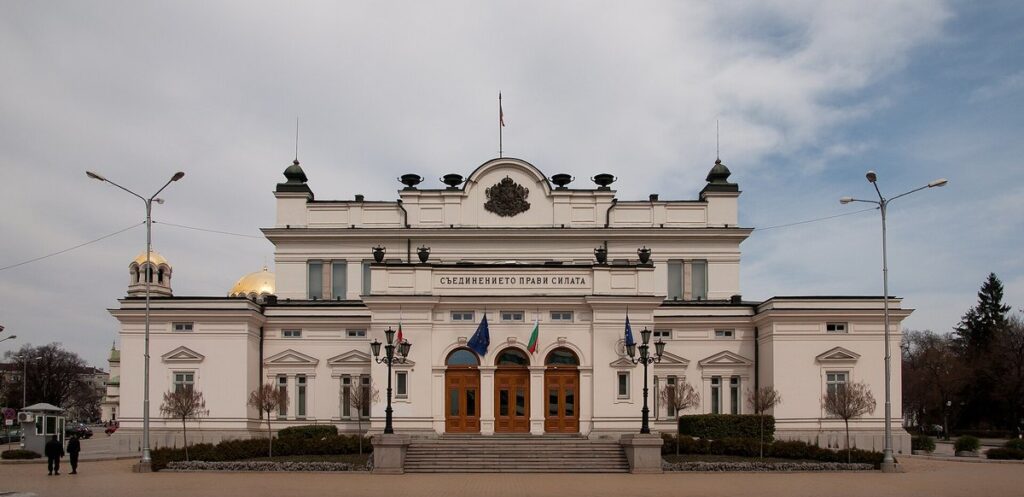
Photo: Plamen Agov / Wikimedia Commons (Public domain)
Bulgaria’s National Assembly appointed 11 members of the Supreme Judicial Council (SJC) on Friday, November 20, ending a prolonged period in which the outgoing council remained in office nearly five years beyond the expiry of its five-year term. The appointments followed years of political instability that had delayed the renewal of the body responsible for appointing the country’s senior magistrates, The Sofia Globe reported.
Parliament voted individually on 21 nominees to fill the 11 seats allocated to the legislature. The successful candidates were put forward by three political groups: Progressive Bulgaria nominated seven, We Continue the Change (WCC) nominated two, and Democratic Bulgaria nominated two. Together, those groups hold 168 seats in the 240-member National Assembly, more than the 160 votes required for a two-thirds majority.
Most of the successful nominees also received backing from GERB and the Movement for Rights and Freedoms (MRF), according to The Sofia Globe. Three winners did not receive that support, although the report does not identify which candidates they were. The voting breakdown for individual nominees was not provided.
Vazrazhdane, described by the publication as pro-Kremlin, was the only parliamentary group to vote against all the nominees. Its own sole nominee failed to secure election.
The appointments address a long-standing vacancy in the council’s parliamentary component. The outgoing SJC had continued to serve for nearly five years after its five-year mandate expired. The Sofia Globe attributed the delay in replacing it to Bulgaria’s political instability since 2021, a period during which the country held eight parliamentary elections in five years.
The SJC is a 25-member body with responsibility for appointing senior magistrates. Parliament elects 11 of its members: six to the judges’ college and five to the prosecutors’ college. Another 11 are elected by magistrates themselves, while three members sit ex officio. The Justice Minister presides over the council but is not a member.
The council’s extended tenure had also drawn criticism over its perceived political influence. The outgoing body was often criticised as being under the influence of MRF leader Delyan Peevski, who is sanctioned under the Magnitsky Act. That description reflects criticism reported about the council; it is not an established finding about the influence exercised over its decisions.
The parliamentary appointments therefore renew the portion of the SJC selected by lawmakers after a period of prolonged political deadlock. They do not, on the information provided by The Sofia Globe, establish the full composition of the incoming council or resolve every question surrounding its transition.
The report does not name the 11 successful appointees or provide their individual vote totals. It also does not state when they will take their seats. The status and timing of the 11 magistrate-elected positions are not detailed in the account, leaving the next steps in the council’s full renewal unclear.
Maya Wilson
World Desk Lead, The Library Media
From The Library — the estate of our family.
Follow Us


