
The Library Media — World
Britain and EU Agree Reset Deals on Food Trade, Youth Mobility and Emissions at Brussels Summit
By Maya Wilson
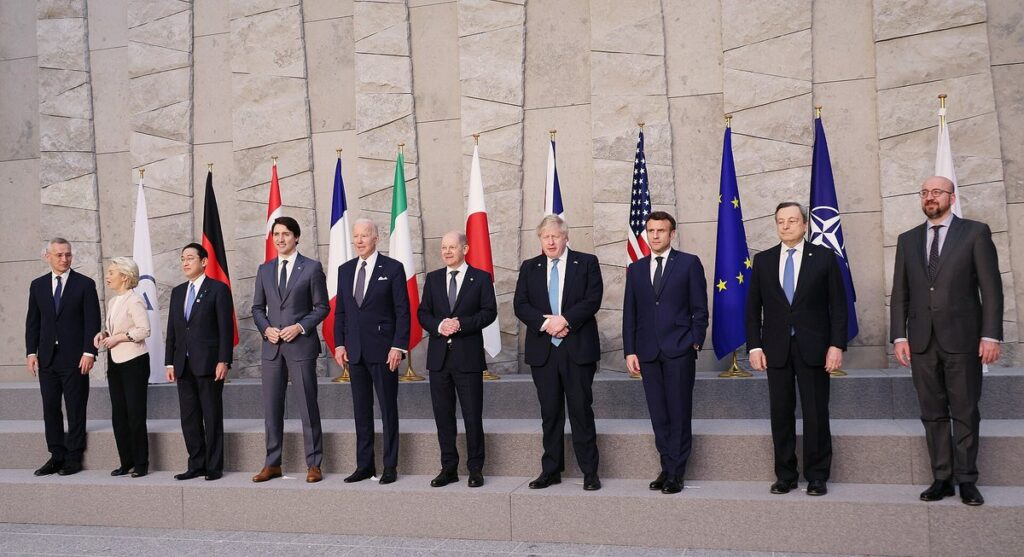
Photo: 内閣官房内閣広報室 / Wikimedia Commons (CC BY 4.0)
Britain and the European Union agreed a series of deals easing food trade, expanding youth mobility and linking emissions trading systems at a summit in Brussels on Friday, November 20, 2026, in a step towards closer relations nearly a decade after the UK voted to leave the bloc.
Prime Minister Andy Burnham’s office said negotiations had concluded on food checks, youth mobility and an emissions trading scheme. The most significant agreement will allow cross-border trade in animals, plants and related products, including sausages and seeds, without the certificates and controls currently required. Britain has estimated the arrangement could add up to £5.1 billion ($6.70 billion) annually to its economy.
Under the proposed youth mobility arrangement, each side will allow young people from the other to enter for work or study for up to three years. EU diplomats said Britain had increased its proposed intake from 50,000 to 100,000. The source did not specify whether that figure was annual, a total allocation or a number applying in each direction. It also gave no age range for eligibility.
A separate agreement will link the British and EU emissions trading systems, exempting goods such as steel from each other’s border carbon levies. Burnham said ahead of the summit: “Britain and Europe share values, interests and a global neighbourhood.” He said the agreements would help reduce costs, keep prices down and create opportunities for young people. He added: “In a more dangerous world, we are stronger together.”
The agreements came amid a broader effort to rebuild cooperation between London and the 27-nation bloc. Both sides recognised the need for a closer alliance against a backdrop of Russia’s full-scale invasion of Ukraine, US tariffs, China’s dominance of critical-mineral supply chains and the war in Iran. The summit, attended by European Commission President Ursula von der Leyen and European Council President Antonio Costa, had been postponed from July following the resignation of Burnham’s predecessor, Keir Starmer.
Burnham has signalled support for a closer long-term relationship. On Monday, he described it as an “obvious truth” that Britain had lost more than it gained from Brexit and has said the country should consider options including rejoining the EU. The latest agreements do not amount to such a move.
Important questions remained unresolved, including university tuition fees. EU countries want their students to qualify for home-fee rates at British universities rather than international fees, which are typically four times higher. Britain prefers to offer only “significantly reduced” fees. The two sides aim to settle the issue within six months.
Another outstanding issue concerns Britain’s demand for special status under the EU’s “Made in Europe” rules, particularly for cars. The EU has indicated it could be willing to grant this, but has linked the prospect to British alignment with its policies restricting imports of Chinese electric vehicles. Agreed wording says that in sectors where cooperation has been reached, Britain would “ensure outcomes consistent with relevant EU measures.” The language appears to leave room for a proposal under which EU public money could be spent on British cars if the UK accepted dynamic alignment with EU trade-protection measures, potentially including restrictions on Chinese-built hybrid and battery-electric vehicles. London has so far been reluctant to take that step.
Burnham’s office said the timetable for the three agreed deals to come into force had been settled and would be published in a joint statement. The specific implementation dates were not provided in the report. Tuition-fee negotiations will continue separately. The report carried no reaction from opposition parties or business groups.
Maya Wilson
World Desk Lead, The Library Media
From The Library — the estate of our family.
Follow Us


