
The Library Media — National Desk
Update — Tuesday: The fight over when to hold the vote is now out in the open. Sen. Mark Kelly of Arizona told The Hill that Senate Democrats will discuss moving up the date of the leadership election, currently set for December 1. Politico has reported that Democrats have privately discussed holding the vote this week, before the Thanksgiving recess, and that a senator could raise rescheduling at Tuesday’s caucus lunch. Caucus rules bar a leadership election before December, but they can be waived — and a waiver vote would itself be held by secret ballot, according to a person with knowledge of the matter cited by Politico. Even some Schumer allies are skeptical the date will move. Van Hollen has called the talk of an earlier vote a “sign of weakness” and accused Schumer’s team of seeking it; Schumer has not publicly commented on the timing.
Eleanor Ever Loyal, National Desk
Sen. Chris Van Hollen of Maryland and Senate Democratic Leader Chuck Schumer of New York are each claiming support from as many as 15 senators as their contest for the party’s leadership enters a critical stretch ahead of a December 1 secret-ballot election.
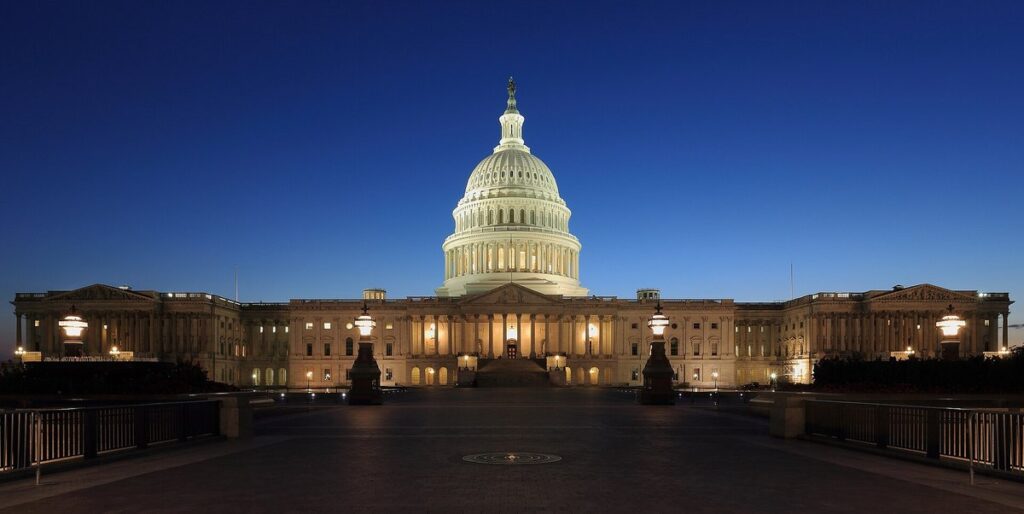
Photo: Martin Falbisoner / Wikimedia Commons (CC BY-SA 3.0)
The race will determine who leads Senate Democrats through the final two years of President Donald Trump’s time in office. Fox News reported Tuesday that it is the first contested election for the leadership post in three decades. Twenty-eight votes are needed to win, leaving neither candidate with a publicly established majority.
Schumer currently has 15 senators in his camp, according to Fox News, making him the clear front-runner in its assessment. But the incumbent has not publicly disclosed a precise count. After Van Hollen announced his challenge last week, Schumer said he welcomed “discussion about the future of our caucus and the important work ahead,” while declaring: “I have the votes to continue serving as Democratic leader.”
Van Hollen, meanwhile, says he has as many as 15 supporters and has described himself as the “underdog.” He has urged colleagues not to treat the outcome as settled. “Let’s not rush into a coronation,” he said.
His named supporters include Sen. Bernie Sanders of Vermont, an independent who caucuses with Democrats, and Sen. Jeff Merkley of Oregon. Two incoming senators, Abdul El-Sayed and Peggy Flanagan, have also backed him. Both are progressives whom Schumer did not initially support in their respective races.
Sen. Tina Smith of Minnesota has endorsed Van Hollen as well, but she is retiring and will not have a vote in the leadership election.
Schumer has led Senate Democrats for nearly a decade, serving as both minority and majority leader. His allies point to the party’s electoral position as evidence of his leadership. Sen. Kirsten Gillibrand of New York, chair of the Democratic Senatorial Campaign Committee, is among those arguing that Schumer led Democrats to a 55-seat Senate majority. That total could increase by one if Alaska flips.
Van Hollen has taken his challenge beyond private conversations with colleagues. He has appeared on cable news and launched a campaign website arguing that voters’ nationwide support for Democrats represented a rejection of the “status quo.” The site says “to deliver, we need new leadership” and asks supporters for donations.
He has also alleged that Democrats were seeking to move the December 1 election to an earlier date to undermine his chances. Van Hollen made the claim in an interview with Politico. Fox News Digital sought comment from both senators’ offices on the allegation, but no response was reported.
The leadership campaign follows Van Hollen’s decision to abandon consideration of a possible 2028 presidential bid. “I’m no longer pursuing that,” he told reporters at the What’s Next conference in Denver, where he campaigned on November 13.
An unnamed Democratic source told Fox News Digital that, at a minimum, Van Hollen’s leadership challenge was “good for his base fundraising.”
For now, both camps are claiming substantial support, but neither has demonstrated the 28 votes required. The secret ballot on December 1 will determine whether Schumer retains the leadership or Van Hollen succeeds in making the party’s first contested leadership transition in three decades.
Update — Tuesday, November 17: Schumer repeated his claim on Tuesday: “I’m confident I’ll be the next leader. I have the votes. We’re all going to roll up our sleeves” (The Wall Street Journal; The Hill). The public record still does not match the claim: only about 15 Democratic senators have publicly endorsed Schumer, and most senators and senators-elect are keeping their intentions private ahead of the secret ballot. Van Hollen has accused Schumer’s team of putting out misinformation to manufacture a sense of inevitability, and calls the race wide open.
Eleanor Ever Loyal
National Desk, The Library Media
From The Library — the estate of our family.
Follow Us


