
The Library Media — National & World · National Desk
An HIV Scientist Was Told to Rewrite Her Approved NIH Study — the Guardian’s Data Says Thousands of Grants Were Changed the Same Way
By Eleanor Ever Loyal
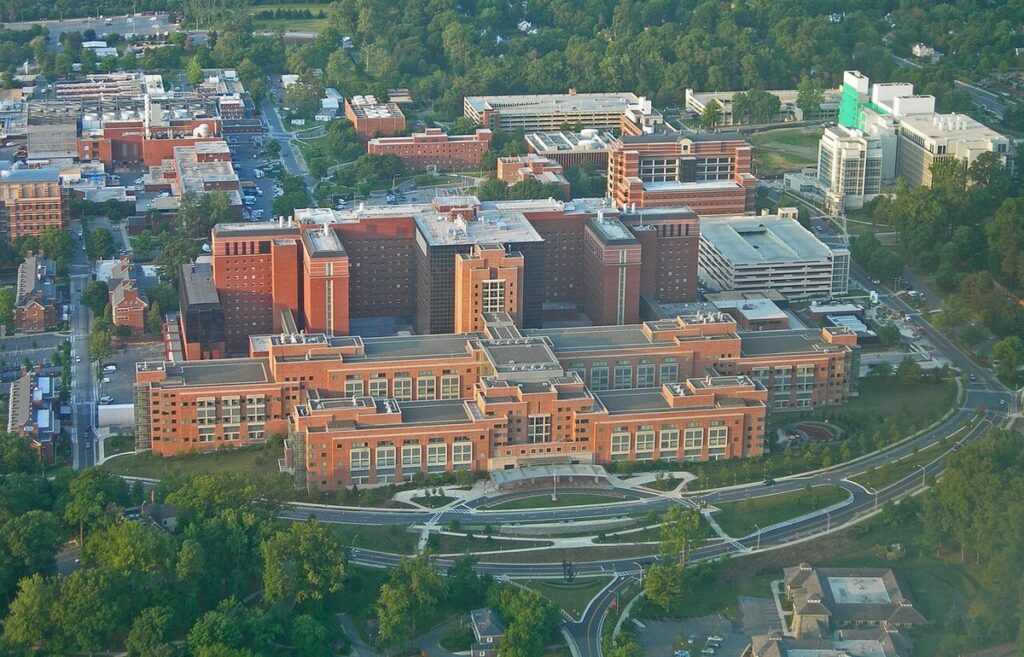
Photo: NIH Image Gallery / Wikimedia Commons (Public domain)
When Dr. Jade Pagkas-Bather received her first National Institutes of Health grant in June 2025, the Chicago-based HIV researcher planned to test whether giving young people living with HIV $500 a month would help them remain in treatment. The randomized trial was designed to study the effects of direct cash assistance on a population facing economic hardship and barriers to consistent care.
The study had passed peer review. But after the award process began, NIH program officers asked Pagkas-Bather to change its language. The requests came verbally, usually during video calls, rather than through a formal written directive. She was asked to remove the phrase “gender identities,” delete a clause noting that Black and Latinx people experience higher rates of poverty, and address officials’ “concern” about the acronym “Big,” short for basic income grants.
Pagkas-Bather made the requested changes. The grant was funded, and she began enrolling participants.
Then, in 2026, the terms changed again. She was told she could not use “unconditional cash transfer” or refer to policy impact in the study. Officials also told her that if she did not remove the cash payments from her $1.3 million grant, she would need to find $1 million from another source.
She eliminated the cash grants and plans to provide food and transportation vouchers instead. The change has consequences beyond the study’s budget: because the revised project differs so substantially from the one participants agreed to join, Pagkas-Bather must obtain their consent again. She told the Guardian that the revised study “bears little resemblance” to the one they originally signed up for.
Her experience is part of a much broader pattern identified in data compiled by Grant Witness and shared exclusively with the Guardian. The figures track changes to grant titles, abstracts and public-health statements when researchers seek renewal of NIH funding. They show a sharp increase in the share of applications whose language or descriptions were changed.
In 2023, Grant Witness data showed 154 changed grants out of more than 40,000, or 0.4%. In 2025, the figure rose to more than 3,401 out of more than 39,000, or 8.6%. In 2026, it was 3,006 out of nearly 35,500, or 8.5%. The Guardian’s analysis of the Grant Witness figures describes the increase from 2023 to 2025 as a 21-fold rise during the Trump administration.
The data also indicate that HIV-related grants were changed at roughly twice the overall rate. Grant Witness recorded changes to 17% of HIV grants in 2025, or 305 of 1,795, and 20.8% in 2026, or 335 of 1,609.
NIH has defended the changes as part of its funding oversight. The agency said more than 5,000 new and continuation grants had been renegotiated “to ensure the agency funds the most meritorious science.” It said scopes of work were altered to replace “poorly defined, non-scientific or subjective concepts,” and described renegotiation as a longstanding practice: “Renegotiation is a normal process that NIH has used for years.”
NIH Director Jay Bhattacharya has repeatedly denied that the agency maintains a banned-words list. The agency’s explanation presents the revisions as a matter of scientific standards and grant oversight. Researchers and former officials, however, have described a process in which certain language and research approaches are being removed after projects have undergone review.
Pagkas-Bather is one of 14 named plaintiffs in a lawsuit seeking class-action status and alleging that the grant changes violate the First Amendment. Shalini Agarwal of Project Democracy is serving as special counsel. A federal court hearing in November is expected to determine whether the case can proceed as a class action, potentially representing other researchers who say their grants were affected.
Former National Institute of General Medical Sciences director Jeremy Berg described the process to the Guardian as “pretty much unprecedented” censorship. Sarah Kobrin, a branch chief at the National Cancer Institute, said program officers “are compelled” to raise the changes with researchers.
Those characterizations are disputed in substance by NIH’s account of its actions as routine renegotiation intended to ensure scientific merit. The Grant Witness figures document changes to grant descriptions and statements; they do not, by themselves, establish why each individual change was made or whether every affected project was altered for the same reason.
For Pagkas-Bather, the consequences are concrete. A trial designed to measure whether unconditional monthly cash assistance could help young people living with HIV stay in treatment is being redesigned around vouchers, with participants required to consent again. The broader dispute is now moving into federal court, where the plaintiffs will seek to establish whether the changes represent an unconstitutional restriction on researchers’ speech.
Eleanor Ever Loyal
National Desk, The Library Media
From The Library — the estate of our family.
Follow Us


