
The Library Media — National & World · National Desk
Air Travel Largely Back to Normal Three Days After the Ground Stop — and No One Is Getting Fired Over It, Mullin Says
By Eleanor Ever Loyal
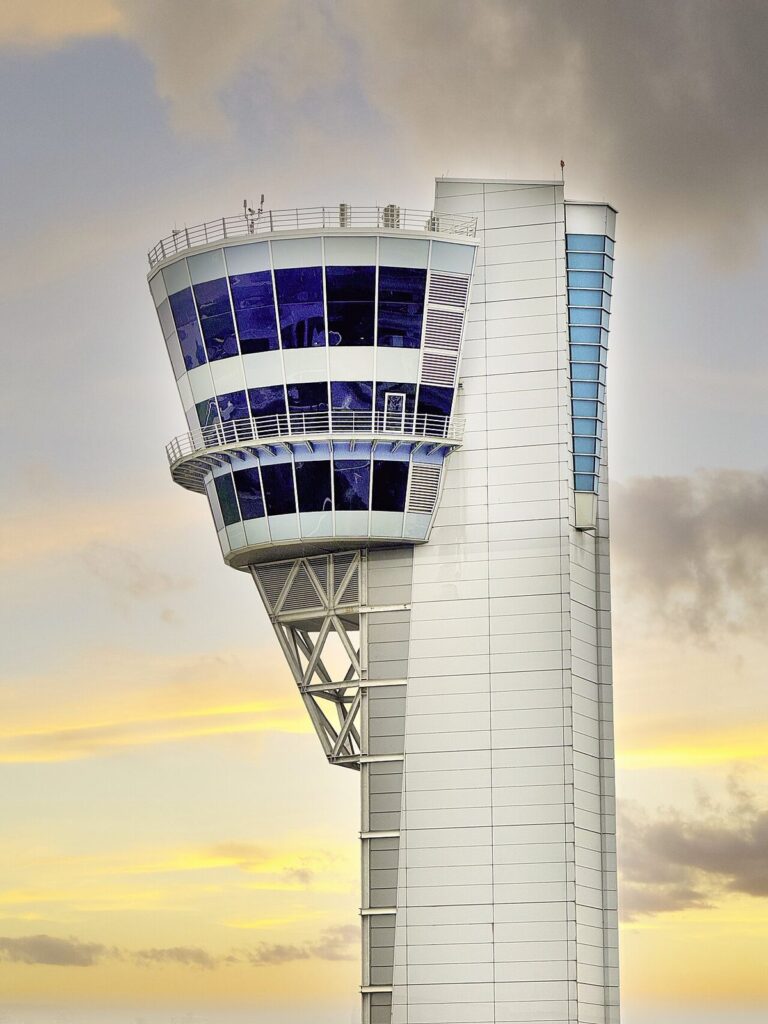
Photo: Harrison Keely / Wikimedia Commons (CC BY 4.0)
Air travel across the United States was largely returning to normal Monday, three days after a rare nationwide ground stop disrupted flights across the country. Delays and cancellations had fallen sharply from Sunday, although thousands of passengers were still affected and federal officials had not determined the ultimate cause of the communications failure that prompted the halt.
At 7 a.m. ET Monday, FlightAware showed approximately 8,365 delayed flights and 533 cancellations nationwide. That compared with 26,392 delays and 2,858 cancellations on Sunday. Only 68 flights were scheduled to be cancelled Tuesday, according to the same snapshot.
American Airlines had the most cancellations Monday, with 157, followed by SkyWest with 38. Dallas-Fort Worth and Chicago O’Hare had the highest cancellation totals by airport of origin. The figures provide a snapshot of the recovery rather than a final count for the day.
The Federal Aviation Administration lifted the ground stop at 8:15 p.m. ET Friday. NBC News described it as the longest nationwide halt to U.S. air travel since September 11, 2001. The immediate suspension ended Friday night, but the disruption continued as airlines worked to reposition aircraft and crews and restore their schedules.
Transportation Secretary Sean Duffy said airlines needed time to “rechoreograph” their crews and aircraft after the disruption. He predicted that operations would be “back to normal tomorrow,” while acknowledging the logistical work required to recover from the stoppage.
The incident began with work on communications infrastructure, according to Duffy’s account. FAA contractor L3Harris was replacing a copper line with fibre at a remote site in El Dorado, Arkansas. That work triggered problems involving a recently replaced router in Amarillo, Texas, which began overloading routers at other air traffic control centres.
The sequence has been described, but the FAA still does not know what ultimately caused the problem. More than 3,500 of the 5,170 communication lines scheduled for replacement by 2028 have been switched. The scale of the replacement effort highlights the challenge of updating infrastructure that has remained in service for decades while keeping the national air traffic system operating.
FAA Administrator Bryan Bedford defended the decision to halt departures, saying it was “the right call.” The ground stop prevented aircraft from continuing to depart while the communications problems were being addressed.
Homeland Security Secretary Markwayne Mullin said authorities had found no evidence of a cyberattack. Asked Sunday by Fox News correspondent Peter Doocy, “Who’s getting fired over this?”, Mullin said he did not expect anyone to lose their job.
“I don’t think anybody’s going to get fired over this. This was an issue with the equipment,” Mullin said.
He described the system as roughly 50 years old and said officials were trying to make it work with newer technology. Mullin put his confidence that no bad actor was involved at “98 percent certainty.” His assessment did not resolve the FAA’s separate uncertainty about the technical cause of the failure.
The episode has also renewed the debate over how much Congress should spend to modernize air traffic control. Duffy again urged lawmakers to approve an additional $50 billion for the system, arguing that the $12.5 billion already provided after “decades of lack of investment is not nearly enough.”
Duffy declined to apologize for the disruption and blamed previous administrations for failing to modernize the infrastructure. President Donald Trump also called Sunday for additional funding. Senior Democrats, however, expressed scepticism, pointing to money already appropriated but not spent.
Duffy disputed the suggestion that the unspent funds made another investment unnecessary. He said money left unspent last year had been earmarked for other purposes and did not include funding for new airspace-management software.
The disagreement reflects a broader question raised by the failure: whether the current modernization effort has enough money and the right priorities to address vulnerabilities in a system on which the country’s air travel depends. The funding debate is continuing even as airlines work through the remaining effects of the ground stop.
The return toward normal operations marks a substantial improvement from the weekend, but it does not amount to a full explanation of what happened. The FAA’s investigation has yet to identify the ultimate cause, and the competing arguments over modernization funding remain unresolved.
The Library Media’s earlier coverage of the ground stop’s second day: https://thelibraryestate.com/flight-cancellations-stretch-into-a-second-day-after-the-nationwide-ground-stop/
Eleanor Ever Loyal
National Desk, The Library Media
From The Library — the estate of our family.
Follow Us


