
The Library Media — World
111 Students Caught Cheating at the Suneung — AI Glasses, a Dead Top Scorer, and a Presidential Order to Rebuild South Korea’s Exam System
By Maya Wilson
Photo: 고려 / Wikimedia Commons (CC BY 4.0)
South Korea caught 111 students cheating in Thursday’s university entrance examination, known as the Suneung, after introducing new security measures including metal detectors and AI-powered monitoring. Five candidates were caught using AI-powered smart glasses, while others were found using smartwatches, mobile phones and hidden earpieces, according to reports by Yonhap and the BBC.
The cases have prompted President Lee Jae Myung to call for a complete overhaul of the country’s state examination system, arguing that its existing safeguards cannot keep pace with artificial intelligence. On Friday, Lee ordered thorough investigations into cheating in both the Suneung and the Law School Admission Test, or LEET, and said no administrative resources should be spared.
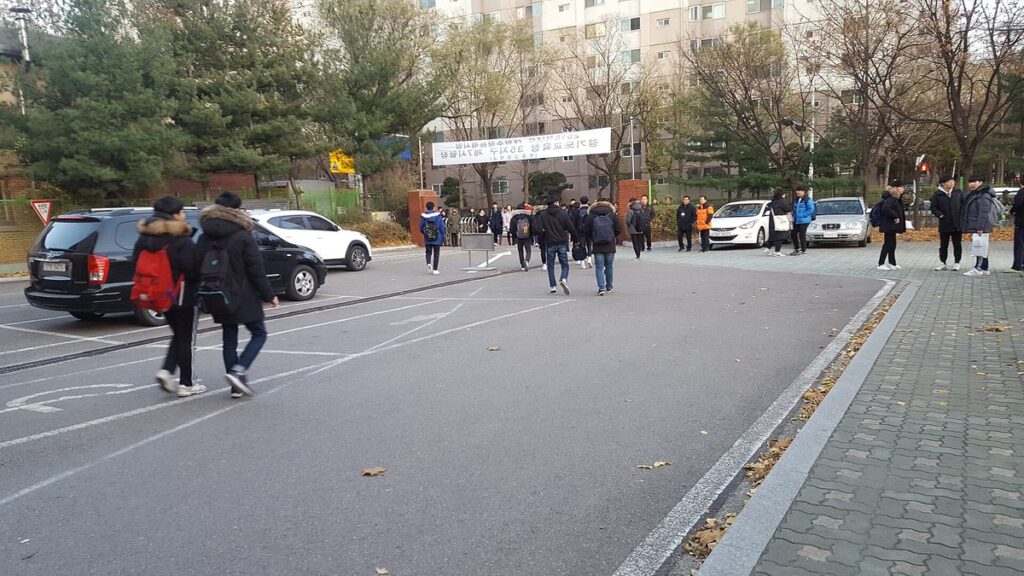
The scale of the Suneung helps explain why the cheating cases have become a national concern. About half a million students sit the examination, a high-stakes test that plays a central role in determining university admissions. Its importance is reflected in a countrywide effort to minimise disruption while candidates take it: flights are grounded and offices open late so that the examination can proceed in relative quiet.
That national accommodation has not prevented technology from challenging the integrity of the test. The BBC and Yonhap reported that the new security measures included metal detectors and AI-powered monitoring, but candidates still attempted to use devices that could provide assistance during the examination. Five students were caught with AI-powered smart glasses, according to the reports. Other cases involved smartwatches, phones and concealed earpieces.
Yonhap described the total as more than 110 candidates caught cheating; the BBC reported the figure as 111. The incidents have raised questions about whether examination authorities can detect increasingly sophisticated forms of assistance, even with additional screening and monitoring in place.
Lee’s response went beyond calls for tighter enforcement. According to Yonhap and the BBC, the president said the current examination system “cannot keep up” with AI technology and urged a complete overhaul to address AI-assisted cheating. He ordered investigations into suspected cheating in both the Suneung and the LEET, extending the scrutiny beyond the university entrance examination that produced the latest cases.
The education ministry will establish a task force as part of the response. The government will also review whether the Suneung should continue in its current form. The education minister apologised over the cheating incidents, according to the reports.
The proposed review puts the design of the examination system itself under consideration, rather than limiting the response to the detection of individual candidates. The government has not, in the facts reported by the two outlets, announced a replacement format or specified what changes it will make. The immediate direction is an investigation, a ministry task force and a broader assessment of whether the existing exam can remain fit for purpose.
The LEET investigation has added a separate and sensitive development. Yonhap reported that a man in his 30s who had achieved the highest score in the law school admission test turned himself in after confessing to using AI-powered glasses. The BBC reported that four students had been caught cheating in the LEET.
The two outlets also reported the death of another man described as a top scorer in the LEET. Yonhap said he was found dead the previous day and reported that police found no signs of foul play and that a note was found. The BBC reported that the man had confessed to cheating before his death. The reports do not establish a connection between the death and any particular cause, and no such conclusion can be drawn from the information provided.
The developments have brought the integrity of both examinations into focus, but the government’s review is broader than the cases already identified. Lee’s order covers suspected cheating in the Suneung and the LEET, while the education ministry’s task force and the planned review of the Suneung’s format signal that officials are considering whether the system itself needs to change.
For now, the government has not set out what a redesigned examination would look like or whether the Suneung will be retained in its present form. The review will determine whether South Korea responds to AI-assisted cheating with stronger safeguards around its existing tests or a more fundamental change to the system that has shaped university admissions for generations.
Maya Wilson
World Desk Lead, The Library Media
From The Library — the estate of our family.
Follow Us


