
The Library Media — National & World · World Desk
Pakistan’s Constitutional Court Strikes Down Sindh and Khyber Pakhtunkhwa Infrastructure Levies
By Maya Wilson
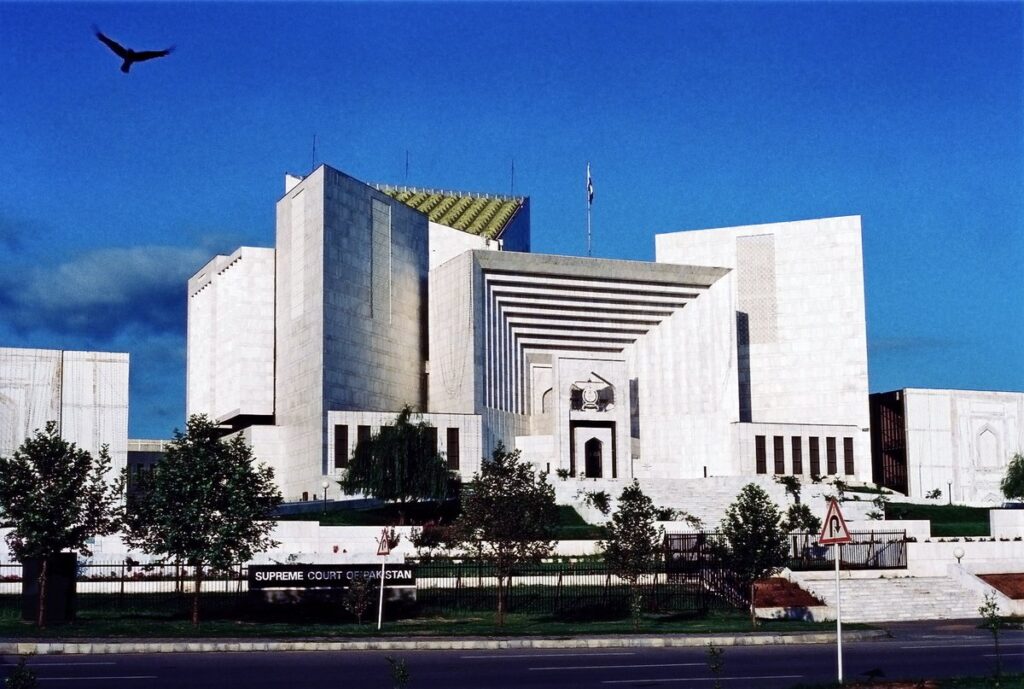
Photo: Usman.pg / Wikimedia Commons (CC BY-SA 3.0)
Pakistan’s Federal Constitutional Court on Thursday struck down infrastructure cess laws in Sindh and Khyber Pakhtunkhwa, ruling that the provincial legislation was unconstitutional and beyond the provinces’ legislative competence. The court also set aside the high court judgments that had upheld the levies, ruling in favour of taxpayers who challenged the charges.
The decision was announced by a two-member bench comprising Chief Justice Aminuddin Khan and Justice Aamer Farooq. A detailed judgment will follow.
The bench heard a batch of 568 petitions, according to Dawn, challenging decisions by the Sindh High Court and Peshawar High Court. The appeals had initially been filed before the Supreme Court before being transferred to the Federal Constitutional Court.
In Sindh, the dispute concerned the Sindh Development and Maintenance of Infrastructure Cess Act, 2017. The levy applied to goods entering or leaving the province by air or sea from or for destinations outside Pakistan. The dispute over the charge dates to 1994. The Sindh High Court upheld the levy on June 4, 2021.
In Khyber Pakhtunkhwa, the challenged measure was the KP Infrastructure Development Cess Act, 2022, which imposed a charge on the transportation and movement of goods within the province. The KP Finance Act, 2024, increased the rate from 1 per cent to 2 per cent. On November 14, 2025, the Peshawar High Court dismissed 157 petitions and upheld the levy.
The central dispute concerned whether the charges fell within provincial authority or intruded on subjects reserved for the federal government.
Representing the federation, senior counsel Hafiz Ehsaan Ahmad Khokhar, appearing for the Secretary of the Revenue Division and the Federal Board of Revenue, relied on Articles 141 and 142(a) of the Constitution and Entries 27, 43 and 59 of the Federal Legislative List. He argued that imports and exports across customs frontiers, inter-provincial trade and commerce, and customs duties were within Parliament’s exclusive domain.
Khokhar further argued that a levy’s legal character depended on its true nature and operation, rather than the name assigned to it. A province, he maintained, could not acquire authority over a federal subject by describing a customs-linked charge as an infrastructure cess. The Additional Attorney General supported the federation’s position.
The provincial governments defended the laws as measures within their authority under Article 142(c). They argued that the levies were intended to finance roads, transport networks and other infrastructure, and to support the safe movement of goods. They maintained that the charges were neither customs duties nor export duties.
The court’s announcement resolves the challenges to both provincial laws, but the detailed judgment has not yet been issued. The reporting does not specify how much either province collected under the levies, whether taxpayers will receive refunds, or whether either provincial government has responded to the ruling.
Maya Wilson
World Desk Lead, The Library Media
From The Library — the estate of our family.
Follow Us


