
The Library Media — World Desk
Peru’s Supreme Court Upholds Crimes-Against-Humanity Convictions of Rodrigo Franco Command Members
By Maya Wilson
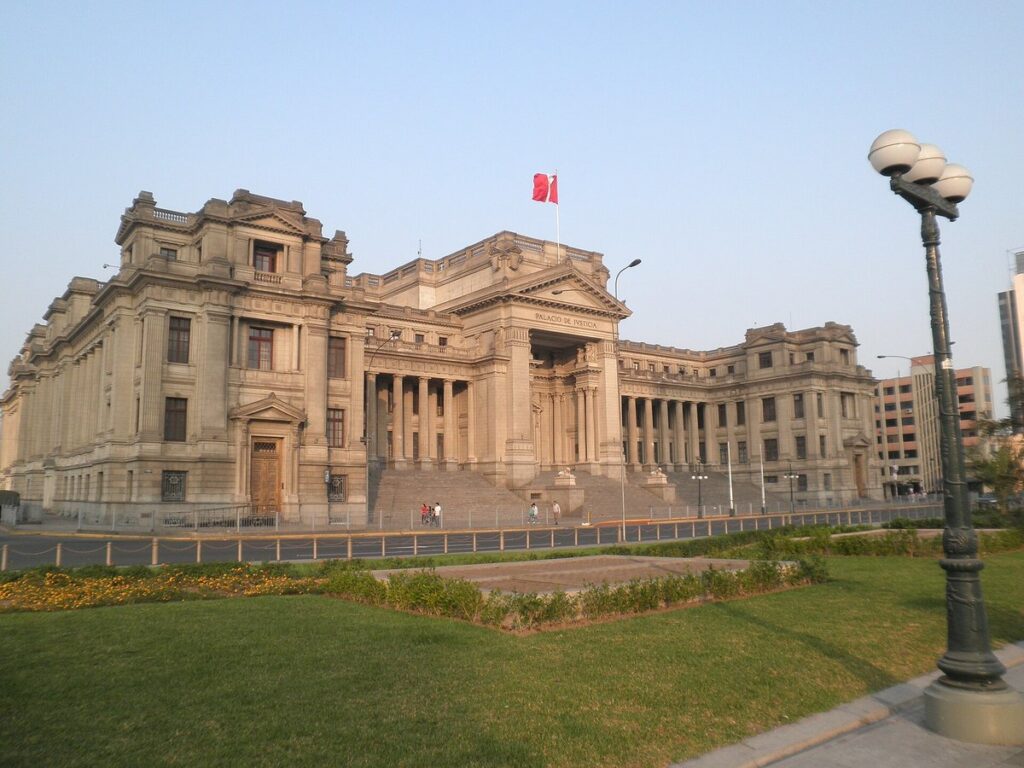
Photo: CivArmy / Wikimedia Commons (CC BY-SA 4.0)
LIMA, Peru — Peru’s Supreme Court has upheld the convictions of three members of the so-called Comando Democrático Rodrigo Franco for kidnapping and qualified homicide, affirming that the crimes constituted grave human rights violations in the context of crimes against humanity.
The court’s Transitory Criminal Chamber (Sala Penal Transitoria) found no basis to declare null the sentence against Jesús Miguel Ríos Sáenz, Jorge Mauro Huamán Alacute and Gino Fiori Gonzales. All three were convicted as authors of kidnapping and qualified homicide. Ríos Sáenz was additionally held responsible for the qualified homicide of Saúl Isaac Cantoral Huamaní and Consuelo Trinidad García Santa Cruz.
The sentences impose 15 years in prison on each defendant and require payment of 200,000 soles in civil reparation to the victims’ successors, according to Andina, Peru’s state news agency.
In its ruling, the chamber affirmed the existence of the clandestine organization and its links to the government of the period. The judgment states: “The existence of the self-styled Rodrigo Franco Democratic Command as a clandestine apparatus made up of police officers and civilians linked to the governing party has been established.”
The court found that the group operated according to a regular pattern. It selected targets from subversive, trade-union or opposition circles, carried out extrajudicial executions and planted evidence or other elements intended to create a false attribution of responsibility. The chamber treated that pattern as part of its assessment of the crimes and the context in which they were committed.
The ruling held that the acts amounted to grave human rights violations in the context of crimes against humanity. On that basis, the court said they could not be covered by amnesties and were imprescriptible, meaning they could not be barred from prosecution by the passage of time.
The chamber set out the legal test for crimes against humanity as requiring a systematic or generalized attack directed against a civilian population, carried out by a state agent or an organization acting under a pre-established plan or policy, with the perpetrator aware of the attack.
That reasoning led the court to reject the application of Law 32107. The legislation establishes that crimes against humanity committed before July 1, 2002, are subject to prescription. The chamber said it should not be applied in this case, maintaining what it described as the historical jurisprudence of Peru’s Constitutional Court and the Inter-American Court of Human Rights.
The ruling states: “Law 32107 must not be applied, maintaining the historical line of jurisprudence of the Constitutional Court and the Inter-American Court of Human Rights, which recognizes the imprescriptibility of crimes against humanity as a norm of ius cogens predating the Rome Statute and the Convention on the Non-Applicability of Statutory Limitations to War Crimes and Crimes Against Humanity.”
The chamber also held that amnesty provisions are inadmissible when they would prevent the investigation and punishment of those responsible for grave violations, including torture, summary, extralegal or arbitrary executions, and forced disappearances.
The case concerns a series of killings and abuses attributed by prosecutors to members of the paramilitary group. In 1989, Saúl Cantoral Huamaní and Consuelo García Santa Cruz, leaders of social organizations, were kidnapped and shot dead in Lima’s San Juan de Lurigancho district. A year earlier, Luis Miguel Pasache Vidal was drowned after being interrogated, while Sócrates Javier Porta Solano was shot dead.
Prosecutors maintained that the acts were committed by people linked to the state apparatus and acting under designation of the Peruvian government. The Supreme Court’s findings on the command’s composition, methods and political links form part of the basis for upholding the convictions.
Peru’s judiciary said the decision guarantees the right to truth, protects victims and ensures compliance with the state’s international obligations. The ruling also reinforces the court’s position that serious violations cannot be insulated from accountability through amnesty or statutory time limits.
Maya Wilson
World Desk Lead, The Library Media
From The Library — the estate of our family.
Follow Us


