
The Library Media — National & World · World Desk
Honduras and the United States Sign Defense and Cyberdefense Agreements During Hegseth Visit
By Maya Wilson
Photo: Luis Alfredo Romero / Wikimedia Commons (CC BY-SA 4.0)
Honduran President Nasry Asfura and United States Secretary of War Pete Hegseth signed two agreements on defense and cyberdefense Thursday, November 19, during Hegseth’s visit to Honduras, according to reporting by the Honduran outlet Proceso Digital.
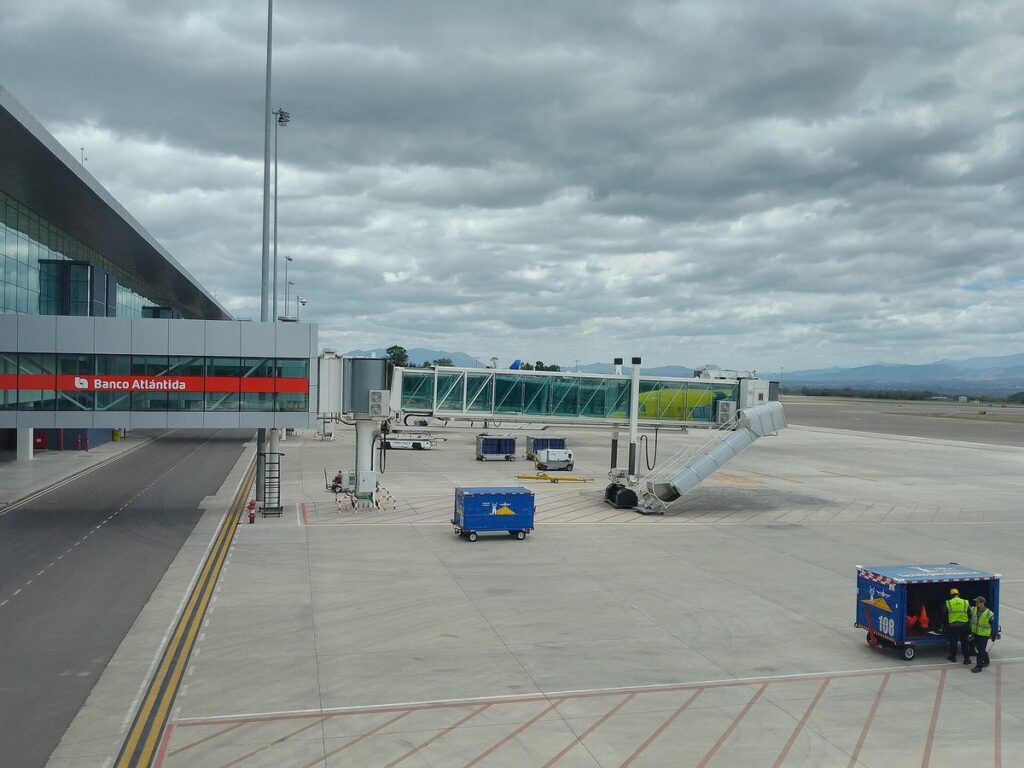
The agreements concern cooperation in defending Honduran territory against transnational organized crime. Hegseth arrived in the afternoon at Palmerola airport in Comayagua, and the signing took place at the military base the United States maintains at the airport facilities, Proceso Digital reported.
The first agreement is a memorandum of understanding on cyberdefense. Hegseth said it would strengthen Honduras’s capacity to protect critical systems, share information about cyber threats and reinforce the cyberdefense capabilities of its armed forces.
He expressed confidence that the memorandum would support Honduran efforts to protect the country’s electrical infrastructure. Hegseth said the United States would examine the country’s requirements with relevant partners, telling the event: “Our team will analyze more thoroughly the needs with inter-institutional partners to ensure that we are making the most of all our support.”
The second agreement is a joint declaration in the field of national defense. Hegseth praised Asfura’s commitment to establish national defense areas along Honduras’s borders. Proceso Digital’s report did not provide the complete description of what those areas were intended to achieve.
Hegseth compared the proposed Honduran approach with national defense areas established by the United States along its own southern border, which he said “today cover almost a thousand miles.” He attributed to those areas a reduction in illegal border crossings, saying they had made it possible “to reach the lowest number of illegal border crossings in 70 years.”
“If we do not control our borders, we do not control our country, since the gangs, drugs, criminals, weapons and violence circulate from one side to the other, threatening our people. That is unacceptable in the United States of America. It is also unacceptable in Honduras,” Hegseth said.
He said the United States stood with Honduras and its “magnificent” Armed Forces on national security.
Cooperation against cartels
Hegseth described accelerating security cooperation as the central objective of his visit. He said the two countries intended to increase efforts against drug-trafficking cartels, interrupt their operations, restrict their movements and deny them the ability to threaten national security.
“I hope that we can accelerate this cooperation and strengthen Honduras’s capacity to defend its territory, achieving measurable advances against common threats,” he said.
Hegseth described relations between the two countries and their armed forces as positive and solid, saying they continued to strengthen. He said both governments shared a mission to protect their people and prevent terrorists from finding safe refuge. He also identified Honduras as a founding member of the Coalition of the Americas against the Cartels.
The visit came after the killing of 12 people in four attacks in the municipality of Yorito, an incident Hegseth addressed in his remarks. Expressing solidarity with the victims’ families, he said a criminal structure that Honduras had designated as a terrorist organization was responsible for the killings in the early hours of Wednesday.
Hegseth said Asfura had responded by designating more than 5,000 police officers and soldiers to pursue those responsible, whom he identified as members of the Cártel del Diablo. The Yorito killings and the Honduran security response had been reported separately by The Library Media earlier Thursday.
Asfura welcomes US support
Asfura said Honduras welcomed United States support at a time of crisis in the country’s fight against terrorism, drug trafficking, organized crime, maras and pandillas. He said the policy of President Donald Trump strengthened Honduras as it faced difficult circumstances.
“All the maras, pandillas, terrorists will be fought, we are firm to move forward to give peace and tranquility, Honduras does not deserve this and we are facing it head-on to be able to fight,” Asfura said.
The Honduran president also cited economic and environmental pressures, including drought and rising oil prices, which he said had affected the country’s economy. He referred to 196 years of friendship between Honduras and the United States and described Hegseth’s arrival as part of an effort to strengthen the two countries, which he said shared the same principle and path forward.
A financial figure for the cooperation was provided separately by Tomás Zambrano, president of Honduras’s National Congress. In a post on X cited by Proceso Digital, Zambrano said the agreements signed Thursday represented $13.5 million in cooperation over two years, intended to reinforce border security for the remainder of 2026 and during 2027.
Proceso Digital did not provide a breakdown of that amount. Its reporting did not specify how much was allocated to either agreement or identify individual programme amounts.
The reports also did not publish the text of either agreement or provide an implementation timetable. No separate United States government statement beyond Hegseth’s remarks at the signing event was included in the reporting.
Maya Wilson
World Desk Lead, The Library Media
From The Library — the estate of our family.
Follow Us


