
The Library Media — World Desk
Japan Supreme Court Upholds Prisoner Voting Ban but Signals Need for Legislative Review
By Maya Wilson, World Desk Lead
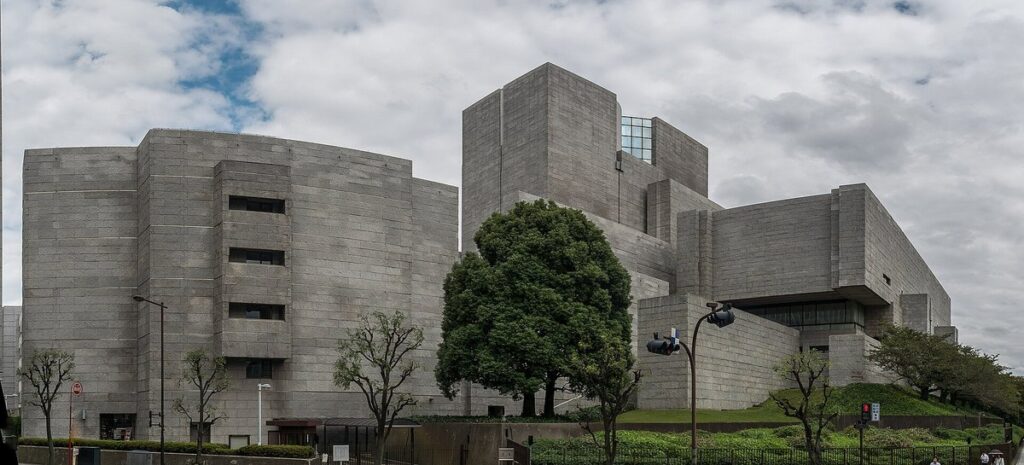
Photo: Big Ben in Japan from Kawasaki, Japan / Wikimedia Commons (CC BY-SA 2.0)
TOKYO, Japan — Wednesday, November 18, 2026.
Japan’s Supreme Court upheld a blanket ban on voting by prisoners serving sentences of imprisonment or heavier penalties on Wednesday, ruling 9–6 that the restriction could not be considered immediately unconstitutional. But the Grand Bench also warned that the system, which applies regardless of the offence or sentence length, may require review, pointing to a lack of sufficient debate in the Diet and among the public.
The ruling, presided over by Chief Justice Yukihiko Imasaki, was the court’s first constitutional judgment on Article 11(1)(ii) of the Public Offices Election Act. The provision strips people sentenced to imprisonment or a heavier penalty of both voting rights and eligibility for public office until they have fully served their sentences. The majority reasoned that voting is both an individual right and a public function, and that restricting it during imprisonment had sufficient grounds, citing Japan’s longstanding electoral practice and restrictions in many U.S. states and the United Kingdom.
The majority nevertheless said it could not be denied that the blanket system was reaching a point where some review was called for. In a supplementary opinion, six justices, including the Chief Justice, said invalidating the entire provision would have excessive effects and expected the Diet to determine appropriate limits. One justice warned that leaving the blanket ban in place indefinitely without legislative debate would likely require it to be judged unconstitutional. The six dissenting justices — Miura Mamoru, Yasunami Ryosuke, Miyakawa Mitsuko, Takasu Jun’ichi, Okino Masami and Ata Hirofumi — concluded that the provision was unconstitutional and void. They said there were no unavoidable grounds for a uniform ban, that such restrictions had “almost disappeared among major countries,” and that practical obstacles could be addressed through absentee voting.
The case was brought by Kentaro Yagihashi, 40, who was sentenced to seven years for fraud in 2019 and barred from voting in the October 2021 Lower House election and July 2022 Upper House election. The Tokyo District Court and Tokyo High Court, which ruled in March 2024, upheld the restriction. Yagihashi completed his sentence in March 2026, making his claims over his voting status moot; the Grand Bench dismissed those claims while still ruling on constitutionality. His appeal for state compensation was dismissed unanimously.
Yagihashi, in remarks translated and reported by Japanese media, criticised the judgment, saying: “To me, it looked like a judgment written with the conclusion decided first… the justices exist precisely because there are matters that cannot be decided by majority vote.” His counsel, Yoshida Kyoko, said the Court “failed to fulfil its role as guardian of the Constitution and damaged its own reason for existing,” according to Japanese media translations.
The ban affects people serving sentences without an offence or sentence-length threshold and continues through parole until the term expires. Pretrial detainees and people serving suspended sentences retain voting rights, while prisoners may vote in constitutional referendums. Justice Ministry figures put the number of people held in penal institutions at about 33,700 at the end of 2024. Earlier court decisions had diverged: the Osaka High Court found the provision unconstitutional in 2013, while the Tokyo and Hiroshima high courts later upheld it.
Maya Wilson
World Desk Lead, The Library Media
From The Library — the estate of our family.
Follow Us


