
The Library Media — National & World · World Desk
Cape Verde Votes in a Presidential Election That Could Make Joana Rosa the Country’s First Female President
By Maya Wilson
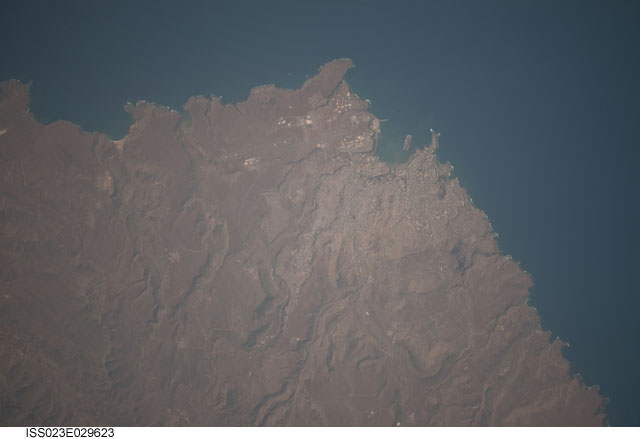
Photo: NASA Astronauts / Wikimedia Commons (Public domain)
Voters in Cape Verde went to the polls on Sunday, November 15, in a presidential election featuring six candidates and a contest between former justice minister Joana Rosa and incumbent President Jose Maria Neves. Rosa could become the country’s first female president if elected, while Neves is seeking a second term, according to Al Jazeera’s reporting.
Rosa, the candidate of the ruling Movement for Democracy (MpD), is the first woman to run for president since Cape Verde gained independence in 1975, Al Jazeera reported. Her election would make her the country’s first woman to hold the presidency.
Her principal challenger is Neves, 66, who has served as president since 2021. A former prime minister who held that office for 15 years, Neves is standing as the candidate of the African Party for the Independence of Cape Verde (PAICV).
Voting began with no result reported. Al Jazeera said polls were scheduled to remain open from 08:00 until 18:00 local time. More than 300,000 people are eligible to vote, including approximately 77,000 registered voters living abroad.
The election requires a candidate to secure more than 50 percent of the vote to win in the first round. If no candidate reaches that threshold, a runoff is scheduled for November 29, according to Al Jazeera. Results are expected within two to three days.
With voting still under way, no winner or outcome can yet be established.
Two main contenders after a change in parliamentary power
The presidential contest follows a parliamentary election in May that reshaped the country’s political balance. Neves’s PAICV won 37 of the 72 seats, after which he appointed Francisco Carvalho as prime minister, Al Jazeera reported.
The MpD, Rosa’s party, had governed Cape Verde for the previous 10 years. Rosa’s candidacy therefore places the former governing party’s presidential hopes against an incumbent whose political party secured the largest number of seats in the May parliamentary vote.
Neves is seeking another term after becoming president in 2021. His long experience in national politics includes 15 years as prime minister before taking the presidency, according to Al Jazeera.
Rosa’s candidacy has a separate significance in the country’s political history. No woman had previously run for the presidency since independence in 1975, Al Jazeera reported. Her participation makes this election the first in which a woman has contested the country’s highest office.
That milestone does not determine the result, however. Six candidates are on the ballot, and the election’s rules require an outright majority for a first-round victory. Otherwise, the two-round process will continue with the scheduled November 29 runoff.
Emigration and living costs among voters’ concerns
Al Jazeera identified emigration, limited job opportunities and the cost of living as key issues in the election.
More than 500,000 Cape Verdeans live outside the country, mainly in Portugal and the United States, according to the news organisation. That diaspora population exceeds the number of people living in Cape Verde itself.
The scale of emigration and the shortage of jobs are central concerns in a country where a substantial share of its people live abroad. The registered diaspora electorate — about 77,000 voters — is included in the more than 300,000 people eligible to participate in Sunday’s election.
The cost of living is another issue facing voters, Al Jazeera reported. The campaign is therefore taking place amid concerns about employment, the movement of people abroad and the everyday cost of living.
The presidency also carries powers that give the office a role beyond ceremonial representation. According to Al Jazeera, the president has veto powers and a mediating role.
Those responsibilities give the presidential contest significance even as parliamentary representation has recently shifted. The May election produced a 37-seat result for the PAICV in the 72-seat legislature, while the presidency remains a separate office with its own constitutional powers.
A first round with a possible second vote
The schedule set out for Sunday’s election gives voters until 18:00 local time to cast ballots. A candidate must receive more than half of the vote to avoid a second round. If no one crosses that threshold, the runoff is due on November 29.
Al Jazeera said the results are expected in two to three days. Until votes are counted and the outcome is established, the contest remains open between the six candidates.
For Rosa, the election offers the possibility of becoming Cape Verde’s first female president and marking a first in the country’s presidential elections since independence. For Neves, it is an attempt to secure a second term after serving as president since 2021 and previously leading the government as prime minister.
The parliamentary result in May, the size of the diaspora electorate and the issues of employment and living costs form part of the backdrop to the vote. But the decisive question remains whether any candidate can secure the required majority on Sunday or whether voters will be asked to return for a runoff later this month.
With polls still open, no exit poll, result or winner has been reported in the facts available to the desk.
Maya Wilson
World Desk, The Library Media
From The Library — the estate of our family.
Follow Us


