
The Library Media — National & World · World Desk
ASEAN Keeps Myanmar’s Junta at Arm’s Length but Opens a Path Back, as the South China Sea Code Reaches 80 Percent
By Maya Wilson
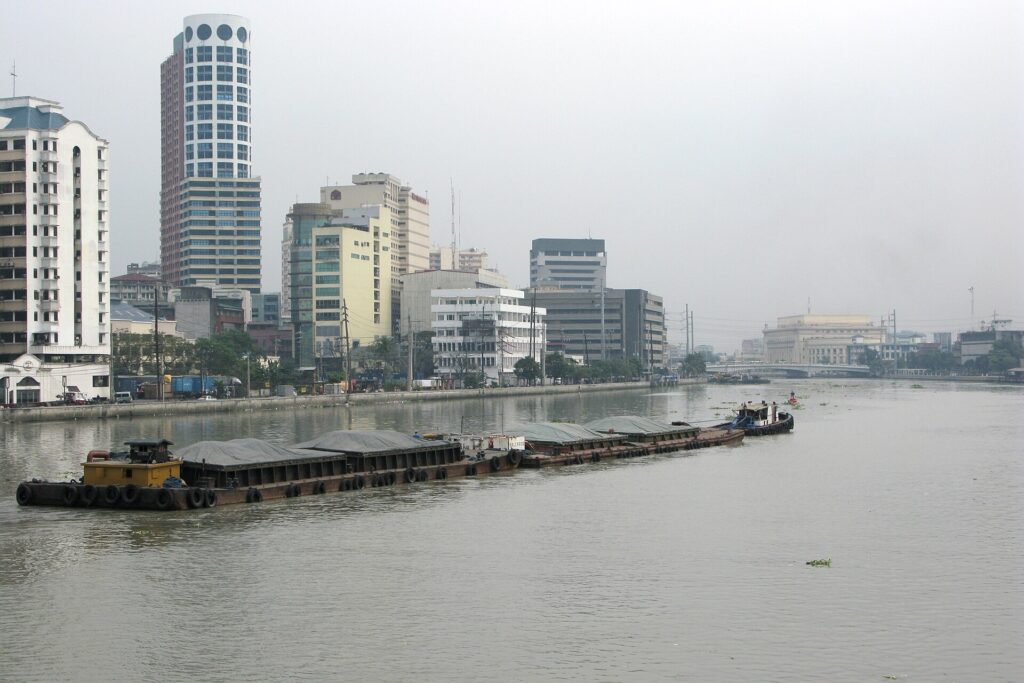
Photo: Vyacheslav Argenberg / Wikimedia Commons (CC BY 4.0)
The Association of Southeast Asian Nations opened its 49th summit in Manila on Sunday with two significant regional issues on its agenda: continued political isolation of Myanmar’s military leadership and negotiations with China over a South China Sea code of conduct that Philippine officials say is now about 80% complete.
The summit is chaired by Philippine President Ferdinand Marcos Jr. and brings together the 11-member regional bloc, according to CNA. On Myanmar, ASEAN leaders reaffirmed their commitment to engagement while maintaining restrictions on the country’s junta leaders. On the South China Sea, meanwhile, negotiators have reported progress but continue to face substantial unresolved questions, with no final agreement or signing reported.
Myanmar’s leaders remain excluded, but engagement is being preserved
ASEAN leaders agreed to maintain the exclusion of Myanmar’s junta leaders from the bloc’s summits and foreign ministers’ meetings, CNA reported. At the same time, they endorsed a phased, progress-based approach that could eventually allow Myanmar to restore its participation in ASEAN activities.
Under the agreed approach, restoration of participation would be considered only “subject to sustained concrete progress” on the Five-Point Consensus, the framework adopted by ASEAN in April 2021. The consensus calls for an immediate end to violence, dialogue among all parties, appointment of a special envoy, humanitarian assistance and a visit by the envoy to Myanmar.
Member states were also encouraged to engage Myanmar constructively, but “in consultation with the Chair,” CNA reported. The language leaves room for continued contact while retaining conditions on any return to full participation by the country’s military leadership.
The distinction is central to the summit’s position: ASEAN is not lifting its restrictions on junta representation, but it is setting out a route through which political progress could lead to a gradual restoration of participation. The conditions are tied to implementation of the Five-Point Consensus rather than to an unconditional return.
Myanmar’s military seized power in February 2021, ousting civilian leader Aung San Suu Kyi, according to CNA. The news agency cited United Nations estimates that more than 100,000 people have been killed and 3.5 million displaced since the military takeover.
The summit’s position therefore continues a policy that combines diplomatic engagement with limits on the junta’s formal representation. The leaders’ agreement, as reported by CNA, does not specify a timetable for Myanmar’s political return. Nor does it say that the conditions of the Five-Point Consensus have been met.
South China Sea negotiations reach about 80 percent
Separately, ASEAN and China have reached provisional agreement on about 80% of a proposed South China Sea code of conduct, Philippine Foreign Secretary Ma. Theresa Lazaro said at a summit briefing on Sunday, according to The Straits Times.
The reported figure represents an increase from 77% on November 14. Lazaro described the negotiations as being in their “final phase,” but said the remaining issues were “substantial.” She estimated that another “five to six months” of work would be needed, while making clear that no deadline had been set.
Singapore, which is due to take over the ASEAN chair in 2027, will continue the negotiations, The Straits Times reported.
The progress figure does not mean that the code is close to being signed or that its central questions have been settled. Two of the major outstanding issues are whether the code will be legally binding and what geographical area it will cover, according to The Straits Times and Al Jazeera.
Only one of four major issues has been resolved: the relationship between the proposed code and the 2002 Declaration on the Conduct of Parties in the South China Sea. That declaration will serve as the code’s foundation, guided by the United Nations Convention on the Law of the Sea, or UNCLOS, the reports said.
Lazaro also stressed that the purpose of the code is to manage disputes, not settle them. That distinction means the proposed agreement is intended to provide a framework for handling tensions rather than resolve the underlying territorial disagreements.
The unresolved questions remain significant despite the increase in the provisional agreement figure. The reports do not identify a completed text, a final pact or a signing at the Manila summit.
Progress without a summit breakthrough
Al Jazeera reported that a pact at this summit was unlikely. Negotiations between ASEAN and China have continued for more than 20 years, and a 2023 ministerial target had aimed to finalise the code by 2026.
Lazaro’s estimate of another five to six months of work points to further negotiations beyond the current summit rather than an immediate conclusion. Her remarks also leave the timetable open: she gave an estimate for the remaining work but did not announce a deadline.
The two issues at the summit reflect different forms of regional diplomacy. On Myanmar, ASEAN is maintaining a political boundary around junta representation while preserving conditional engagement. On the South China Sea, the bloc and China have reported substantial progress toward a shared framework, but have not resolved key questions about the agreement’s legal force and geographical reach.
For Myanmar, the agreed position makes any restoration of participation dependent on sustained progress under the Five-Point Consensus. For the South China Sea, the 80% figure marks a reported advance in negotiations, not a completed agreement.
The 49th summit opened without a reported breakthrough on either issue. ASEAN leaders have reaffirmed the conditions governing Myanmar’s participation, while negotiations with China continue toward a code whose final terms remain unsettled.
Maya Wilson
World Desk, The Library Media
From The Library — the estate of our family.
Follow Us


