
The Library Media — Science, Technology & Health · AI News & Intelligence Desk
The Fast One Gets the Keys: Google Puts Gemini 4 Hydrogen in Search for Everyone
By Catalina Clarke
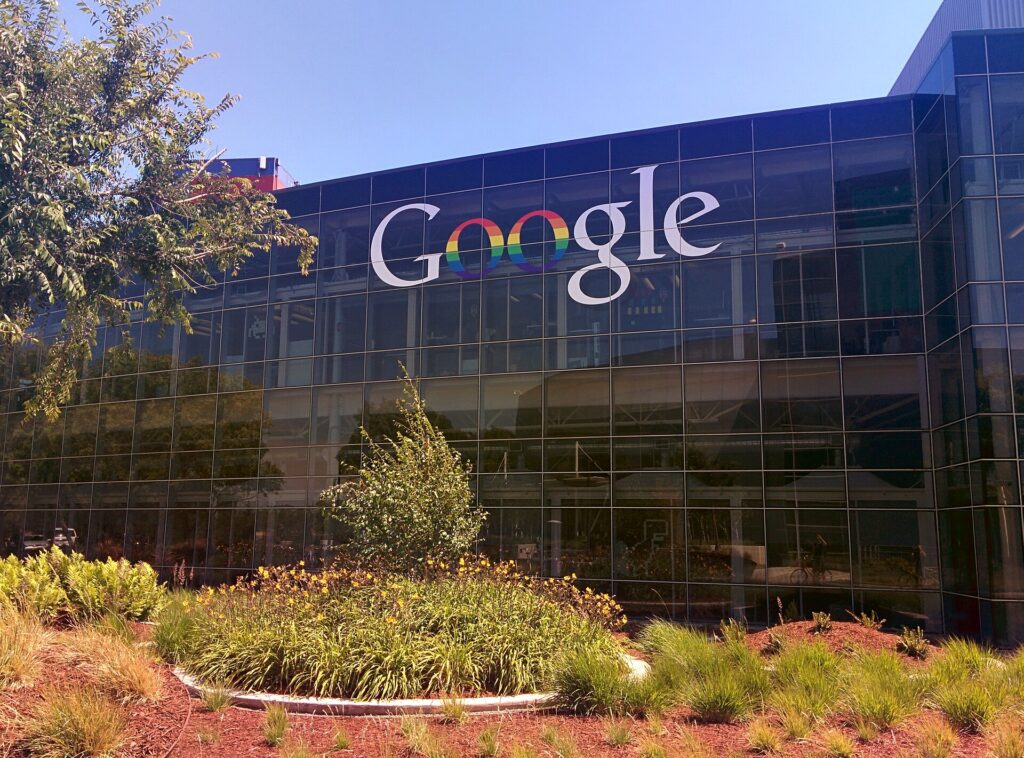
Photo: Grendelkhan / Wikimedia Commons (CC BY-SA 3.0)
Google introduced Gemini 4 Hydrogen on Thursday, November 12, and put it in front of the largest audience any of its models has ever had on day one: everyone who searches. In a Keyword post by Koray Kavukcuoglu, senior vice president at Google DeepMind and Google’s chief AI architect, the company presented Hydrogen as the Gemini family’s rapid-execution model, built for speed and efficiency in everyday coding and agentic work. The same day, Google made it the default model in Search’s AI Mode for all users — a step Google calls its biggest model update to Search yet.
The price is half the story, and on a Friday it may be the bigger half. Hydrogen costs a flat $1.50 per million input tokens and $7.50 per million output tokens across its entire one-million-token context window. That is half the introductory $2 and $10 rate on Gemini 4 Carbon, the family’s frontier model, and the flat structure matters as much as the level: the price does not change as the context fills, which makes the cost of a long agentic session something a buyer can calculate before it starts rather than after the invoice arrives.
Hydrogen does not displace the frontier tier. Google is explicit that Carbon and Gemini 4 Argon remain the models for deep, long-horizon reasoning. Hydrogen is the tier underneath them — the model meant to run constantly, in products and workflows where latency and cost decide whether a feature ships at all. That positioning is itself the news: the competition among the big labs is moving down the range, from who has the smartest model to whose fast model is cheap and quick enough to become the default everywhere.
On performance, the figures Google published are its own, and they are striking. Google says Hydrogen surpasses Argon on the Artificial Analysis Intelligence Index at its default high thinking level, scoring 51 to Argon’s 50, and reaches 54 at a new, higher xhigh setting. Google says it more than tripled the previous fast model’s score on Terminal-Bench 4.1, a benchmark of terminal-based agent tasks, at 57% against 18.2% for Gemini 3.8 Flash, and cut fabricated claims by more than five times.
One of those claims deserves a flag. Google says Hydrogen finishes tasks two and a half times faster than Gemini 3.8 Flash at the default setting. An independent check by orcarouter.ai, published November 13, confirmed the Intelligence Index score in its own harness but found that the speed claim did not survive outside Google’s. Speed is the product’s entire premise, so the gap between the vendor’s harness and an independent one is worth recording plainly: the capability scores have outside support; the speed figure, so far, is Google’s.
Buyers can tune the trade-off themselves. Hydrogen ships with four thinking levels — low, medium, high as the default, and the new xhigh — scaling quality, latency and cost within the same model. That turns deliberation into a priced setting rather than a different purchase, and it is the xhigh tier that carries the headline index score of 54.
Launched alongside the model, in Google’s Antigravity development environment, is Orchestrator, which switches dynamically between models inside a single session — Carbon coordinating while Hydrogen powers worker and verifier agents in parallel, isolated workspaces. On Terminal-Bench 4.0, Google says Orchestrator reached near-Carbon task success while consuming on average 24% less quota and completing work 19% faster; those figures are Google’s. The architecture is the tell about where Google thinks the value sits: not one model doing everything, but an expensive mind supervising fast ones.
Google also published safety figures, all from its internal evaluations and labelled here as such. The company says Hydrogen reduces overreach in agentic tasks by up to 81% and cuts misaligned actions and task shortcutting across its tool-use and coding evaluations by a factor of twelve against 3.8 Flash, with a 96.7% rate on its internal agent-honesty evaluation. Independent replication of those numbers does not yet exist; they are the maker’s measurements of its own machine, offered on the record.
Google also reports a 53.4% score for Hydrogen on the MKA benchmark.
Availability is immediate and broad: all tiers of Google AI Studio, the Gemini API, Gemini for business, the Gemini app, and Google Search for all users, with Antigravity access for paid Google AI Pro and Ultra subscribers. A model launch used to be an event for developers. This one changed what answers the world’s default search box on the day it was announced — at half the frontier price, with the speed claim still awaiting an outside witness.
Catalina Clarke
AI News & Intelligence Desk, The Library Media
From The Library — the estate of our family.


