
The Library Media — National & World · World Desk
Iraq’s Premier Cracks Down on Kataeb Hezbollah’s Oil-Smuggling Network: Nine Senior Officials Dismissed, Forces Deployed Around Jurf al-Sakhar
By Maya Wilson
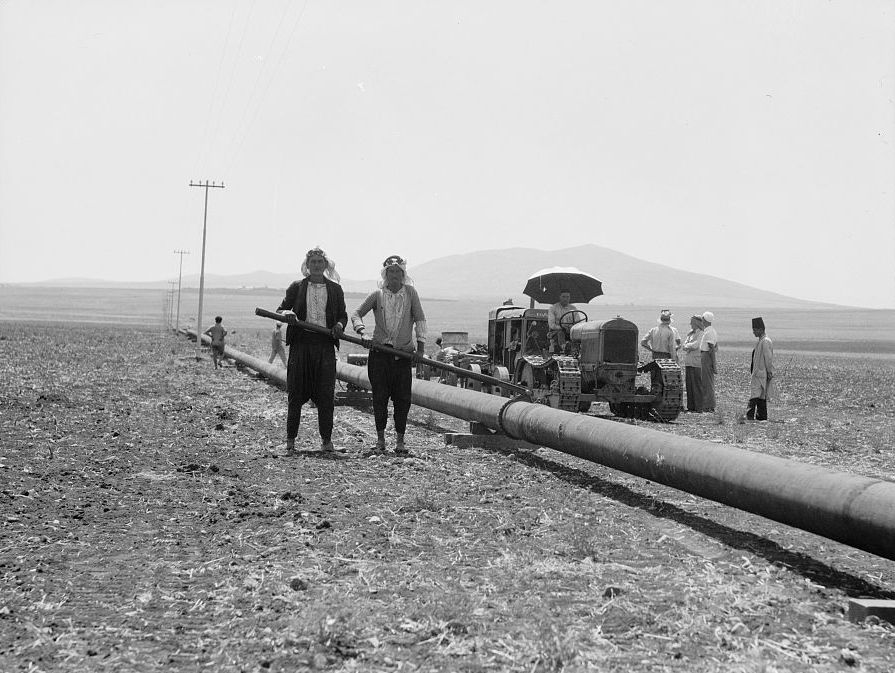
Photo: American Colony Photograhic Department, / Wikimedia Commons (CC0)
Iraq’s government has launched a crackdown on an oil-smuggling network linked to the Iran-backed militia Kataeb Hezbollah, dismissing nine senior officials and deploying security forces around a town regarded as central to the alleged operation, Reuters reported Monday, citing multiple senior Iraqi security, army, police and oil officials.
The operation centres on Jurf al-Sakhar, in Babil province, about 50 kilometres south of Baghdad. Prime Minister al-Zaidi has ordered Iraqi forces deployed around the town and prepared to enter it, according to Reuters. The reporting does not say that troops have entered Jurf al-Sakhar. The distinction is important: the deployment and preparations have been reported, but an entry into the town has not.
Reuters’ official sources described a network through which Kataeb Hezbollah has taken hundreds of millions of dollars from Iraqi state oil stolen since 2021. The allegations point to a substantial diversion of public resources, involving oil infrastructure and storage facilities, and have prompted action against officials in the provincial security apparatus and state oil administration.
Nine senior officials have been dismissed as part of the government response, Reuters reported. Those removed include the Babil police chief, provincial intelligence and security commanders, and the director of the state Oil Pipelines Company. Suspects have been referred to the courts, according to the officials cited by Reuters. The dismissals indicate that the investigation has reached beyond alleged smugglers to officials responsible for policing, intelligence, security and oil infrastructure.
Pipeline inspection exposes alleged siphoning
A government inspection on Saturday found a punctured 26-inch oil pipeline, Reuters reported. The pipeline has capacity of at least 200,000 barrels per day, and the inspection found that oil was being siphoned from the line into storage pits.
The reported discovery provides a physical focus for the investigation: a major state pipeline allegedly breached to divert oil into facilities where it could be collected and moved outside the authorised system. The capacity figure describes the pipeline’s ability to carry oil; it should not be read as a measure of how much was stolen or siphoned. Reuters’ reporting does not establish a daily theft volume.
The alleged operation has been running since at least 2021, according to the senior Iraqi officials cited by Reuters. Their account places the financial scale in the hundreds of millions of dollars, although the reporting does not provide a complete accounting of the volumes, transactions or individual beneficiaries. The allegations concern state oil and public infrastructure, making the case both a security issue and a test of the government’s ability to protect national resources.
Kataeb Hezbollah is an Iran-backed armed group with significant influence in Iraq. The allegations described by Reuters place the militia at the centre of a network exploiting state oil infrastructure. The reporting does not, however, establish through a public court judgment that the group or particular individuals have been found guilty of the alleged theft. Suspects have been referred to the courts, where the allegations will have to be tested.
Forces positioned around Jurf al-Sakhar
Al-Zaidi’s order to deploy forces around Jurf al-Sakhar signals that the government is preparing a security operation in the town. Reuters reported that forces had been positioned around it and were prepared to enter. It did not report that the entry had taken place.
That distinction also matters when assessing the operation’s immediate scope. The reported actions so far include the dismissals, referrals to the courts, the pipeline inspection and the deployment around the town. Any subsequent entry, arrests inside Jurf al-Sakhar or seizure of additional facilities would require separate confirmation.
The government’s decision to act in an area associated with a powerful Iran-backed militia carries potential political and security implications. But the Reuters account does not report U.S. operational involvement in the crackdown, and the operation should not be characterised as a U.S.-directed or U.S.-supported action.
The case now places several questions before Iraqi authorities: whether investigators can establish the full chain of responsibility, how much state oil was diverted, which officials or intermediaries enabled the alleged network, and whether the government can enforce its orders in and around Jurf al-Sakhar.
For now, the reported crackdown has produced nine senior dismissals, court referrals and a military deployment around the town. The discovery of the punctured pipeline offers investigators a concrete lead into the alleged theft. Whether the government proceeds into Jurf al-Sakhar — and whether it can dismantle the network described by its officials — remains to be established.
Maya Wilson
World Desk Lead, The Library Media
From The Library — the estate of our family.
Follow Us


