
The Library Media — National & World · World Desk
In Lima, Pope Leo Puts ‘the Least Among Us’ at the Center of His First Full Day in Peru
By Maya Wilson
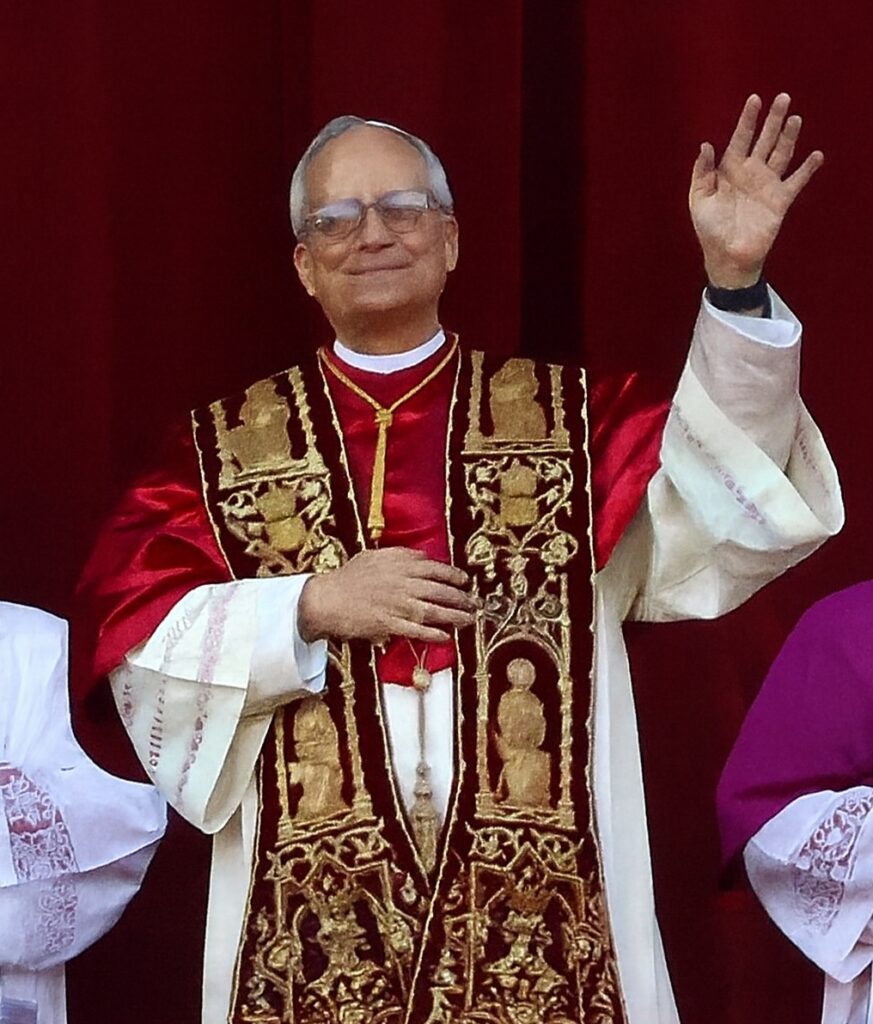
Photo: Edgar Beltrán / The Pillar (CC BY-SA 4.0)
Pope Leo XIV placed poverty, exclusion, the dignity of women and the protection of vulnerable people at the centre of his first full day in Lima on Thursday, November 12, addressing Peru’s bishops, meeting a large public gathering in the city’s main square and praying with young people at the National Stadium.
The day formed part of the Pope’s November 6-17 journey through South America. Its programme combined meetings with Church leaders, public appearances and prayer, with repeated attention to people facing hardship and marginalization.
Leo began the morning with a meeting with the bishops of Peru at the chapel of the Archbishop’s Residence at 09:00. He also stopped at the Santuario de Las Nazarenas and received the keys to the city at the Palacio Municipal.
At 10:30, he joined Midday Prayer at the Cathedral Basilica of St John. In his homily, he recalled St Turibius as “a courageous defender of the poor” and described his own mission as one of “particular concern for the weakest.”
The Pope’s message to the bishops drew on the example of two Peruvian saints, Martín de Porres and Juan Macías. He said they “teach us to recognize Christ in the least among us,” adding that “no person can be judged by their rank, their origins or their social status.”
That emphasis on human dignity and the treatment of people on the margins carried into his public meeting later in the morning. At 11:24, Leo addressed a gathering in the Plaza de Armas on “Challenges and Hopes for the Future of the Peruvian People.” About 40,000 people attended, according to the official programme.
There, he said the human person is “endowed with infinite dignity” and must be at the centre of public life. He also drew attention to the disadvantages faced by women living in poverty and women from Indigenous and Afro-American communities.
“Women living in poverty or belonging to Indigenous and Afro-American communities are liable to suffer a double marginalization,” he said. He followed that warning with a direct appeal: “let us value women! Let us protect and respect girls!”
Leo also addressed pressures on family life, speaking of families wounded by economic problems, emigration, addictions, abuse and domestic violence. He said wealth and resources were not intended for the benefit of only a few, linking the wellbeing of families to a broader concern for how society treats those in need.
His remarks to the bishops had also addressed the Church’s response to abuse. Leo called for a response “with truth, justice, forgiveness, making amends,” and urged protection “for the weakest.” He called for help for “those who suffer from poverty, exclusion, corruption, violence and a lack of opportunities.”
In the afternoon, the Pope held a private meeting lasting more than an hour at the Apostolic Nunciature with six survivors of clergy abuse. Some were linked to groups formerly tied to the Sodalitium. The meeting has been covered separately.
The day’s final major public event took place at 17:55, when Leo joined a prayer vigil with young people and university students at the National Stadium. About 60,000 people were inside the stadium, while approximately 300,000 gathered outside.
The scale of the evening gathering brought the Pope’s first full day in Lima to a close with a focus on younger generations. Across his addresses, he had returned to the dignity of each person and the responsibility to protect those most exposed to poverty, violence, exclusion and abuse.
On Friday, November 13, Leo is scheduled to travel to Chiclayo in northern Peru as his South American journey continues.
Maya Wilson
World Desk, The Library Media
From The Library — the estate of our family.


