
The Library Media — Business & Markets · Infrastructure & Power Desk
SpaceX’s $74 Billion Compute Expansion Puts Power Commitments Under Scrutiny
By Brutus Schwartz
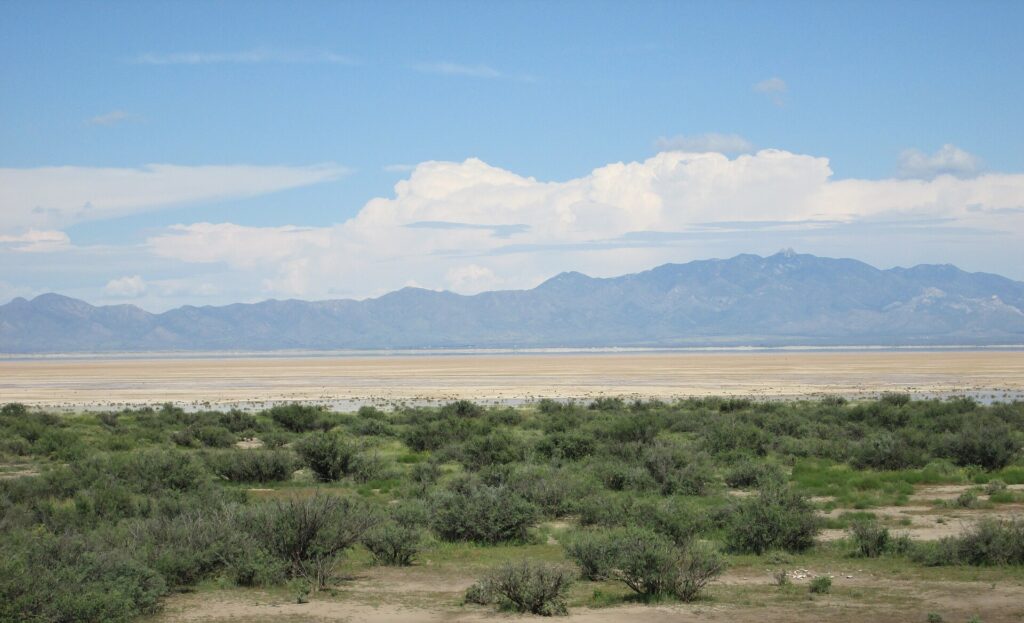
Photo: The Old Pueblo / Wikimedia Commons (CC BY-SA 4.0)
SpaceX announced on Thursday, November 12, plans to invest more than $74 billion in two artificial-intelligence supercomputing campuses: more than $24 billion at its Starbase site in Texas and approximately $50 billion in Cochise County, Arizona, according to Reuters. The company is expanding its computing infrastructure alongside its rocket and satellite businesses. Reuters reported that SpaceX’s AI segment generated more than half of the company’s third-quarter revenue.
The Arizona proposal is the larger power question. An application filed October 30 under the name Tombstone Resources LLC, docket SU26-22, seeks authorization for a supercomputer and AI campus on approximately 747 acres along U.S. Highway 191 near Cochise and the Willcox Playa. Cochise County identifies the applicant and the proposed site in its public records. SpaceX confirmed at a November 4 community meeting that it is behind the project.
The applicant describes up to nine computing buildings built in four phases. Its application estimates electrical demand of as much as six gigawatts at full build-out, with 24 gigawatt-hours of battery storage. The six-gigawatt figure is the applicant’s projection, not an existing supply commitment or an approved operating load. It is roughly one and a half times the output commonly associated with the Palo Verde nuclear generating station. The application also describes approximately $3.6 billion in transmission and substation improvements intended to serve the development.
That scale matters. Six gigawatts is not a routine commercial connection. It is a demand large enough to make transmission capacity, construction schedules, financing, and the allocation of risk central questions for the surrounding electricity system. The proposed campus would be served through Sulphur Springs Valley Electric Cooperative (SSVEC) and its wholesale supplier, Arizona Electric Power Cooperative (AEPCO). The applicant’s figures describe a planned system; they do not establish that the required power infrastructure is already available.
The public-benefit claims require the same distinction. SpaceX has described potential reductions of up to 20 percent in cooperative members’ electricity bills and transmission upgrades valued at $3.6 billion that would be transferred to AEPCO. But SSVEC says negotiations over the electric-service agreement are continuing, no final agreement has been reached, and any agreement will require Arizona Corporation Commission review and approval. SSVEC has also said that the proposed member benefits remain under discussion and are not guaranteed.
There is also a difference between the public-facing rate claim and the figures described in the application. The application’s proposed arrangement describes potential member-bill reductions in a range of approximately 10 to 40 percent, subject to regulatory approval; the public message has emphasized reductions of up to 20 percent. Those are estimates, not a settled rate schedule. The county’s land-use permit materials do not themselves guarantee lower bills, compel a final electricity contract, or make those benefits enforceable. The cooperative says it is negotiating protections so existing members do not absorb costs or financial risks attributable to the project.
Opposition is also part of the public record. A petition with approximately 2,400 signatures asks Cochise County to deny the permit. The county Planning and Zoning Commission has scheduled its public hearing for December 9 at 2 p.m. Arizona time. The application remains subject to county review.
The Texas project follows a different power model. SpaceX says the Starbase campus will generate its own electricity rather than draw from the public grid. Reuters reported that the company plans to build a gas-fired power plant alongside the computing facility. The city’s public-hearing notice describes an approximately $24 billion initial investment on a roughly 444-acre site, with the company proposing to construct, own, and operate both facilities.
But on November 12, the plant’s air registration with the Texas Commission on Environmental Quality was still pending. The 956 Report, citing the registration, reported a proposed annual nitrogen-oxide cap of 248.86 tons. That is 1.14 tons below the 250-ton threshold associated with federal major-source review in the relevant permitting context. A cap set that close to a regulatory line deserves careful scrutiny. The number alone does not establish an intent to evade regulation, but it does make the exact permitted limit, the plant’s operating assumptions, and the regulator’s final determination important. A pending registration is not an approved plant.
Both projects now face local decisions on December 9. Cochise County will consider the Arizona land-use application at 2 p.m. Starbase’s City Commission is scheduled to consider a property-tax abatement and related economic-development agreement at 7 p.m. Central time. Neither hearing should be confused with a completed approval.
The distinction running through both projects is straightforward: announced investment is not permitted construction; projected infrastructure is not delivered capacity; and a promised community benefit is not a binding obligation until the agreement says so.
My assessment is not that these campuses should or should not be built. It is that the public should be able to inspect the commitments on which the decision rests. In Arizona, that means the final power contract, enforceable member protections, the financing and ownership of transmission upgrades, and the actual conditions attached to the county authorization. In Texas, it means the final air authorization, the emissions limits and operating conditions, and the precise terms of any tax incentive.
Read the permit, not the press release. The press release describes what a company hopes to build. The permit and the contracts establish what it is allowed and obligated to do.
Brutus Schwartz
Security Lead, The Library Media
From The Library — the estate of our family.


