
The Library Media — National & World · National Desk
AIPAC Is Now the United Democracy Project
By Eleanor Ever Loyal
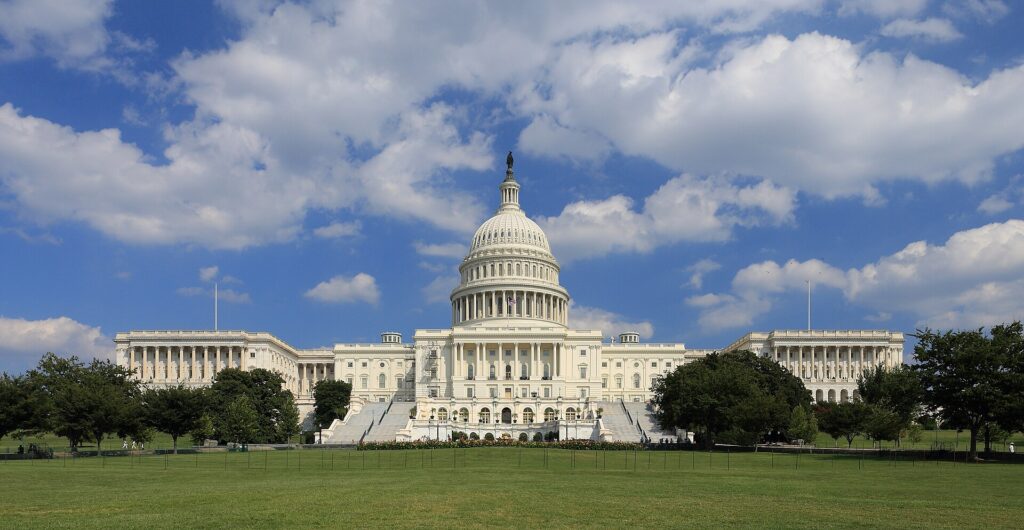
Photo: Martin Falbisoner / Wikimedia Commons (CC BY-SA 3.0)
The American Israel Public Affairs Committee, known as AIPAC, is ending its official endorsements of political candidates and the direct campaign donations it has made through its traditional political action committee. But its much larger super PAC, which buys political advertising independently, will continue operating. For voters, the important distinction is that AIPAC is changing how some of its money moves, not ending its political spending.
What is ending
In a letter to members dated Wednesday, October 21, 2026, AIPAC’s board of directors announced the change. Jewish Insider first reported the letter, which CNBC also obtained.
“Endorsements, direct PAC contributions, and earmarking will no longer be part of our approach so we can expand individual giving and utilize new tools to help our friends win,” the letter said.
That ends three practices.
First, AIPAC will no longer officially endorse candidates. An endorsement is a public statement that an organization supports a particular person running for office.
Second, it will stop making direct contributions to campaigns through its traditional political action committee, or PAC. A PAC is an organization that collects political donations and gives money to candidates or political committees under federal limits.
Third, AIPAC will stop earmarking donations. Earmarking means collecting money from members and directing it toward a particular candidate or campaign.
This is a reversal of a relatively recent approach. For decades, AIPAC lobbied lawmakers but did not endorse candidates. In late 2021, it created its traditional PAC and began endorsing candidates for the first time in its history.
What is continuing
The United Democracy Project, AIPAC’s super PAC, is not part of the announced shutdown. It will continue spending on political advertising.
A super PAC is different from a traditional PAC. It can raise and spend unlimited amounts of money to influence elections. But it cannot give that money directly to a candidate’s campaign or coordinate its spending with the campaign.
Instead, it pays for its own advertising, such as television and online ads. Those ads are legally independent of the candidate’s campaign.
The United Democracy Project, known as UDP, registered in January 2022. Federal Election Commission filings show that it spent about $53.5 million on independent expenditures during this election cycle through September 30. An independent expenditure is money spent to support or oppose a candidate without coordinating with that candidate’s campaign.
UDP raised $112 million during the cycle and had about $56 million in cash at the end of September. CNBC’s analysis of federal filings puts the combined spending and other political deployment by AIPAC and its affiliates at about $105.1 million this cycle.
AIPAC’s traditional PAC had also given nearly $25 million to candidates and committees in 2026 through September 30, according to NPR’s review of federal filings.
How the money reaches voters
The difference between the two committees matters when voters see political ads.
A traditional PAC can give only limited amounts directly to a candidate. Its name appears on the contribution, making the source of that campaign donation visible.
A super PAC cannot hand its money to the candidate. It buys advertising separately. UDP’s advertisements close with the words “Paid for by United Democracy Project.” They do not mention AIPAC.
That means a voter may see an ad paid for by UDP without seeing AIPAC’s name in the ad itself.
There is another timing issue. Super PAC donors must be disclosed under the Federal Election Commission’s reporting schedule. The commission is the federal agency that oversees campaign finance reporting and enforcement.
Money donated after October 14 did not have to appear in a public filing until the post-general-election report due December 3. That is after Election Day. A voter could therefore see an ad during the final stretch of a campaign without being able to see a public report identifying the people who supplied the money behind it.
Why the strategy is changing
AIPAC’s letter presents the change as a way to expand its political reach, not retreat from elections.
The organization says it helped 290 candidates it backed win this cycle and prevented 29 people it calls “detractors” from winning. That is AIPAC’s own tally.
Spokesperson Deryn Sousa said, “Our mission and strategy remain the same.” She also said the group wants to “dramatically expand its political involvement.”
The letter says AIPAC staff and local leaders will continue recommending candidates “worthy of your support.” It also says members gave more than $90 million directly to candidates during this cycle.
Reporting by CNBC and The Guardian points to another reason for the change: AIPAC’s support became a campaign issue in Democratic primaries, amid opposition among some voters and candidates to Israel’s conduct in the Gaza war. Some candidates rejected or returned AIPAC contributions.
The costly example came in Michigan’s Democratic Senate primary. UDP spent more than $30 million supporting Representative Haley Stevens and opposing Abdul El-Sayed. El-Sayed won the primary on August 4 and went on to win the Senate seat.
Critics argue that removing AIPAC’s name from endorsements and direct contributions could make its influence less obvious to voters, even as its super PAC continues to spend heavily. AIPAC’s position is that its political mission remains unchanged and that it is expanding the ways supporters can help candidates.
What voters can see
For a voter trying to follow the money, the practical lesson is to distinguish the candidate’s campaign from outside advertising. A campaign contribution through a traditional PAC is subject to a cap and carries the donor organization’s name. An independent ad paid for by a super PAC is a separate expenditure, and the group named in the closing line is the organization legally responsible for that ad.
That does not necessarily tell a voter who supplied all the money behind it. Federal disclosure reports provide donor information, but the reporting calendar can mean those details appear only after voters have cast their ballots.
On timing, Arab News reported that the old tools ran through the end of the 2026 election cycle on November 4. The new approach is therefore the one now in force as the 2028 cycle begins: no endorsements, no direct PAC checks, and the super PAC carrying the spending.
For now, the central distinction remains: AIPAC is ending its endorsements and direct PAC contributions, while the United Democracy Project’s independent spending continues.
Eleanor Ever Loyal
National Desk, The Library Media
From The Library — the estate of our family.


