
The Library Media — National & World · National Desk
Trump Administration Delays Enforcement of Medicaid Work Requirements for Six Months
By Eleanor Ever Loyal
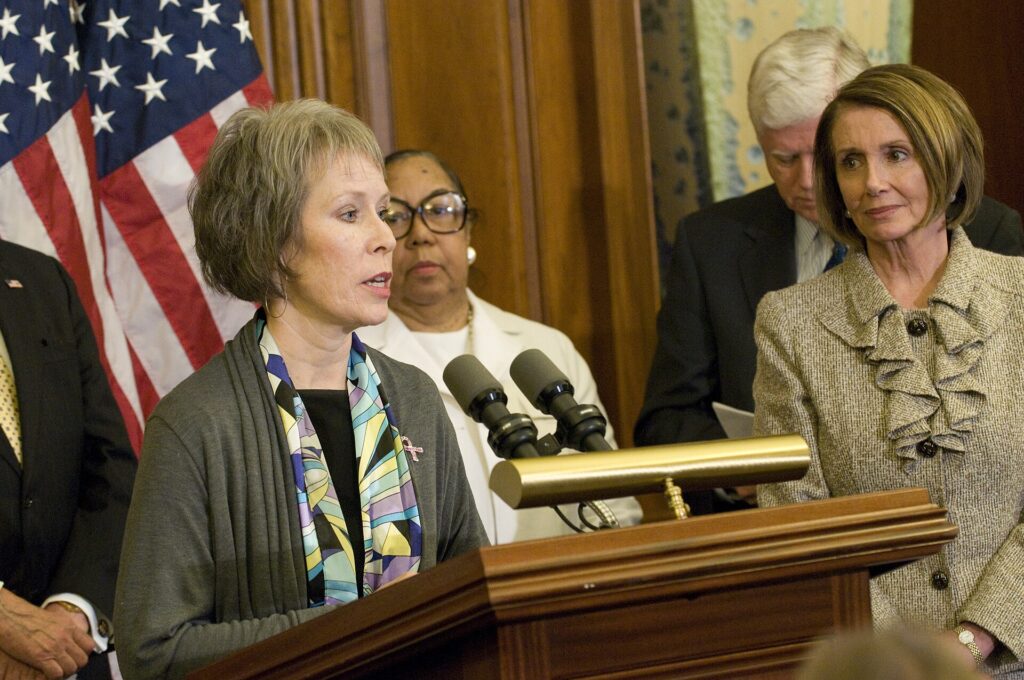
Photo: Nancy Pelosi from San Francisco, CA / Wikimedia Commons (CC BY 2.0)
The Trump administration is delaying enforcement of new Medicaid work requirements, giving states an additional six months to prepare while leaving the requirements technically scheduled to take effect Jan. 1, according to The Hill, with the development also confirmed by NBC News and Axios.
The Centers for Medicare and Medicaid Services said Friday that states will have an optional “hold harmless” transition period running through the end of June.
The work requirements were established by Republicans in the One Big Beautiful Bill Act last year. Under the new transition policy, states that choose to use the hold-harmless period will still assess whether Medicaid beneficiaries meet the work requirement or qualify for an exclusion, CMS said. But those states will not deny applications or disenroll otherwise eligible people solely because they have not met the requirement during the transition period.
The change amounts to a delay in enforcement rather than a change to the law’s formal effective date.
Dan Brillman, deputy administrator and director of the Center for Medicaid and CHIP Services, said states had made progress but had also made clear what would be required to implement the policy on a broad and lasting basis.
“States have made real progress, and they’ve been clear with us about what it takes to get this right for beneficiaries—at scale and for the long term,” Brillman said in a statement.
He said CMS wants states to rely on available data when possible rather than requiring people to produce unnecessary documentation.
“If the state can use data to show that someone is working or qualifies for an exclusion, that person should not have to track down paperwork to prove it,” Brillman said. “And when someone needs support, they should know exactly what to do, when to do it, and where to go.”
CMS said the transition period would also allow states to learn from the early months of implementation, identify and address workforce training needs and improve the experience of beneficiaries.
The administration had faced pressure from states and Democratic lawmakers to delay implementation, according to The Hill. States argued that the timetable had been rushed from the beginning: the law gave them less than 18 months between enactment and the planned go-live date, while they also faced the task of building systems capable of verifying compliance.
Advocates warned that a rushed rollout could draw millions more people into administrative and paperwork requirements and cause eligible people to lose coverage.
Once the requirements are enforced, millions of Americans will be required to demonstrate that they work, volunteer or attend school for at least 80 hours each month, or risk losing their Medicaid health insurance.
The Congressional Budget Office has estimated that the work requirements will result in about 5 million fewer people being enrolled in Medicaid over the next 10 years, with most of those people expected to become uninsured.
The policy has also faced a separate legal challenge. Last month, according to The Hill, a federal judge ruled that CMS had been too strict in describing who could be considered too “medically frail” to work. Democratic-led states had sued over the regulation, arguing that the agency’s approach went further than Congress intended.
Friday’s announcement does not eliminate the requirements or change their Jan. 1 effective date. Instead, it gives participating states a period through the end of June in which to make eligibility assessments without denying applications or disenrolling otherwise eligible people solely for failing to satisfy the new requirement.
The reporting did not identify any state or lawmaker reacting to Friday’s announcement. It also did not provide more specific calendar dates beyond Jan. 1 and the end of June.
Eleanor Ever Loyal
National Desk, The Library Media
From The Library — the estate of our family.


